The Critical Role of Modern Recycling Technology
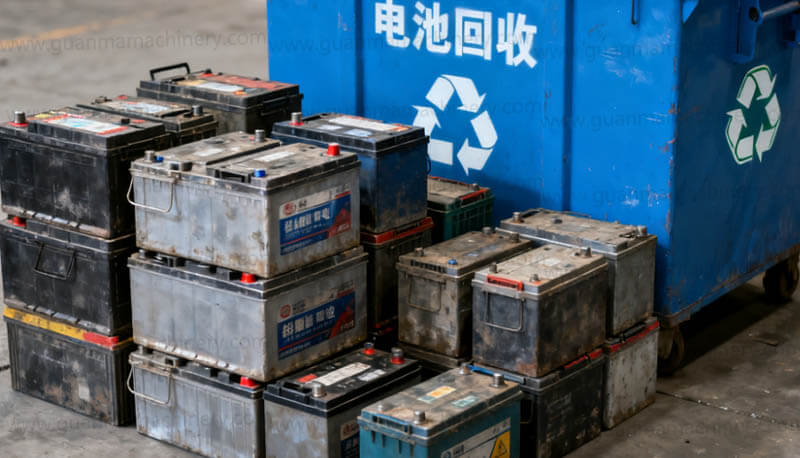
As the world continues to seek sustainable solutions for managing industrial waste, lead acid battery recycling equipment has emerged as a transformative technology that addresses both environmental concerns and resource recovery needs. This advanced machinery enables the efficient processing of spent batteries, recovering valuable materials while significantly reducing ecological damage.
How Advanced Recycling Systems Work
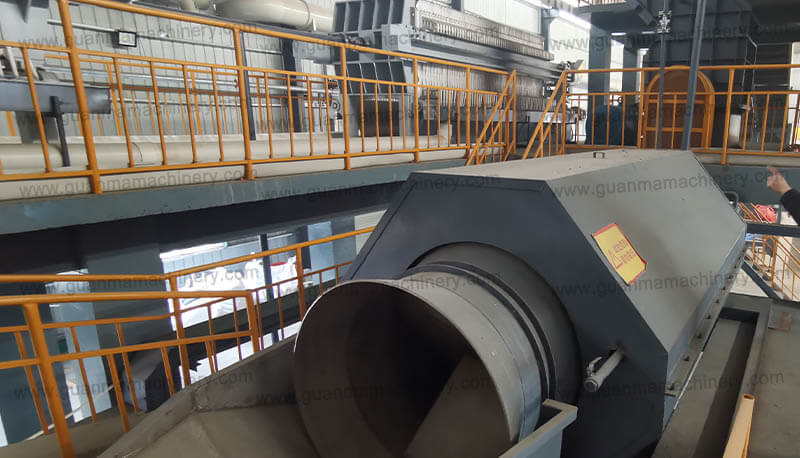
Modern lead acid battery recycling equipment utilizes sophisticated processes to maximize material recovery and minimize environmental impact. Guanma Machinery employ a closed process of “hook-type heavy hammer crusher + hydraulic separation” to achieve precise separation of battery casings, lead grids, and lead paste. This technology achieves remarkable recovery rates of 99.5% for lead paste and produces plastic with purity exceeding 98%.
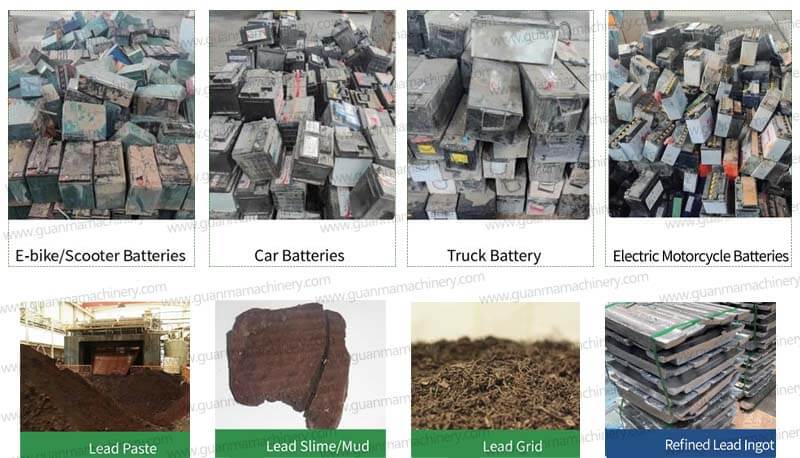
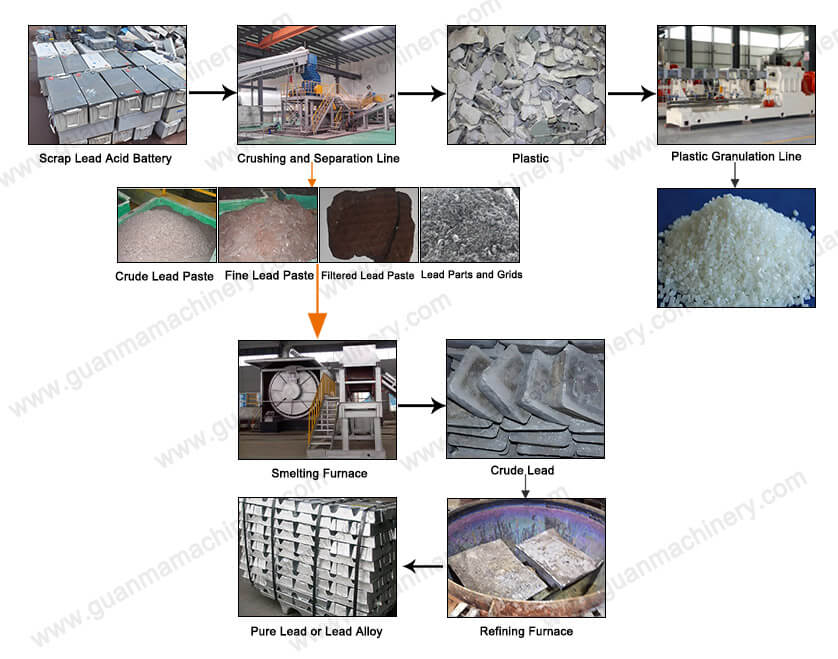
The process typically involves several key stages:
1. Crushing and Separation
Automated crushing subsystems break down batteries into component materials.
2. Hydraulic Separation
Components are separated based on density and physical properties.
3. Material Refinement
Advanced hydrometallurgical processes further purify recovered materials.
Many systems incorporate PLC control systems and AI visual sorting technology to enable fully automated production, increasing efficiency by 40% compared to manual operations.
Economic Advantages of Modern Recycling Systems
Investing in advanced lead acid battery recycling equipment offers significant economic benefits:
High Material Recovery: For every ton of waste lead-acid batteries processed, equipment can recover approximately 0.8 tons of lead, 0.15 tons of plastic, and 0.05 tons of sulfuric acid, with direct material value reaching $1,800 per ton.
Reduced Production Costs: The production cost of recycled lead is only 30% of that of primary lead.
Byproduct Utilization: Recovered plastics can be used in battery casings and auto parts, while by-product ammonium sulfate fertilizer connects to agricultural markets.
Scale Advantages: Large-scale modular production lines (100,000-ton annual capacity) show 25% lower unit energy consumption than smaller operations.
Environmental Protection and Compliance
Contemporary battery recycling crushing systems prioritize environmental protection through integrated pollution control measures:
Emission Control: Advanced hydrometallurgical processes avoid sulfur dioxide emissions associated with traditional pyrometallurgical methods
Waste Treatment: “Sulfide precipitation + ion exchange” processes treat waste acid, reducing lead ion concentration to less than 1mg/L.
Innovative Features of Modern Recycling Equipment
The latest advancements in lead acid battery recycling equipment include:
Automated Separation Systems: Multi-stage crushing and separation technologies that efficiently sort battery components.
Integrated Pollution Controls: Built-in systems for treating acids, capturing emissions, and managing waste streams.
Smart Monitoring Systems: AI-powered visual sorting and PLC controls for optimized operation.
Energy-Efficient Designs: Modern systems consume significantly less energy than traditional methods.
Applications and Material Outputs
Advanced lead acid battery recycling equipment produces various valuable materials:
High-Purity Lead: With purity exceeding 99.9% after electrolytic deposition.
Reusable Plastics: PP and ABS plastics with purity over 98%, suitable for new battery cases and automotive parts.
Sulfuric Acid Recovery: Processed and neutralized for safe disposal or reuse.
Fertilizer Byproducts: Ammonium sulfate suitable for agricultural applications.
Choosing the Right Recycling Equipment
When selecting lead acid battery recycling equipment, consider:
Processing Capacity: Match equipment size to your volume requirements.
Automation Level: Balance initial investment against long-term labor costs.
Environmental Compliance: Ensure systems meet local and international regulations.
After-Sales Support: Technical support, maintenance services, and spare parts availability.
Future-Proofing: Modular designs that can adapt to changing material compositions and regulations.
The Future of Battery Recycling Technology
The evolution of lead acid battery recycling equipment continues with developments in:
Enhanced Automation: Increased use of AI and machine learning for improved sorting efficiency.
Zero-Waste Processes: Complete recovery of all battery components with minimal residual waste.
Energy Recovery Systems: Technologies that capture and reuse energy generated during processing.
Mobile Recycling Units: Compact systems suitable for decentralized processing operations.
Investing in Sustainable Resource Recovery
Modern lead acid battery recycling equipment represents a sophisticated solution to one of the most significant waste management challenges of our time. The combination of economic benefits, regulatory compliance, and environmental protection makes this technology an essential investment for responsible waste management and resource recovery operations.
As the industry continues to evolve, staying informed about the latest technological developments in battery crushing and separation equipment will be crucial for maintaining competitive advantage and maximizing both economic and environmental returns.
📩 Get Your Free Quote Today
Contact us today to discuss your project, capacity requirements, and target materials. Our team will reply within 24 hours with a customized proposal. You can also reach us directly at [email protected] — we are here to help!