Types of Waste Home Appliances We Process
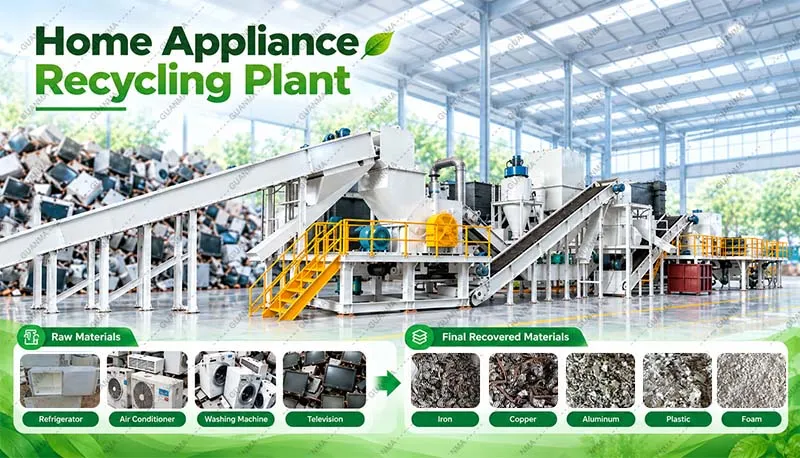
Guanma Machinery waste home appliance recycling line is designed to process a wide range of end-of-life household appliances—including refrigerators, washing machines, air conditioners, televisions, and more—recovering metals, plastics, and other valuable materials.
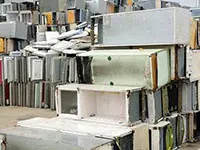
Waste Refrigerators
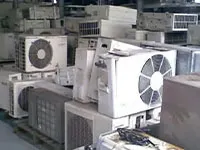
Waste Air Conditioners
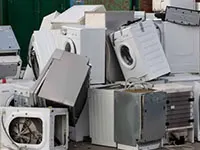
Waste Washing Machines
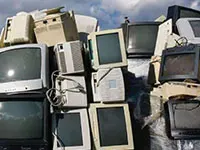
Waste Televisions
Our household appliance recycling line can be planned for different categories of end-of-life appliances.
Final Recovered Materials
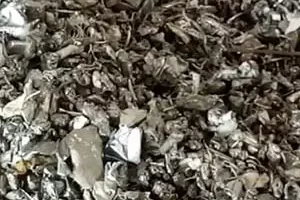
Iron
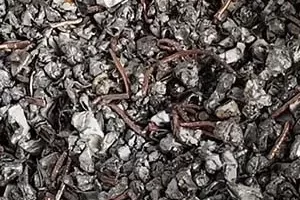
Nonferrous metal
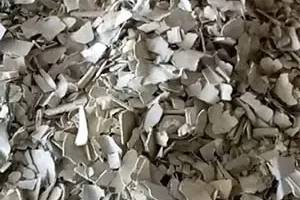
Plastic
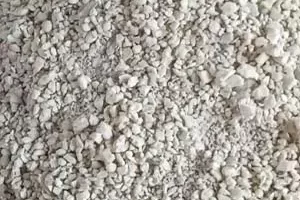
Foam
A home appliance recycling plant can separate valuable material fractions from end-of-life household appliances through appropriate dismantling, size reduction and separation processes. Depending on the incoming appliances and equipment configuration, the potential recovered materials include iron and steel, copper, aluminum, plastics and foam.
Waste Home Appliance Recycling Process
Home appliance recycling plant processing workflow is designed according to the incoming appliance mix. A typical project may combine the following stages.
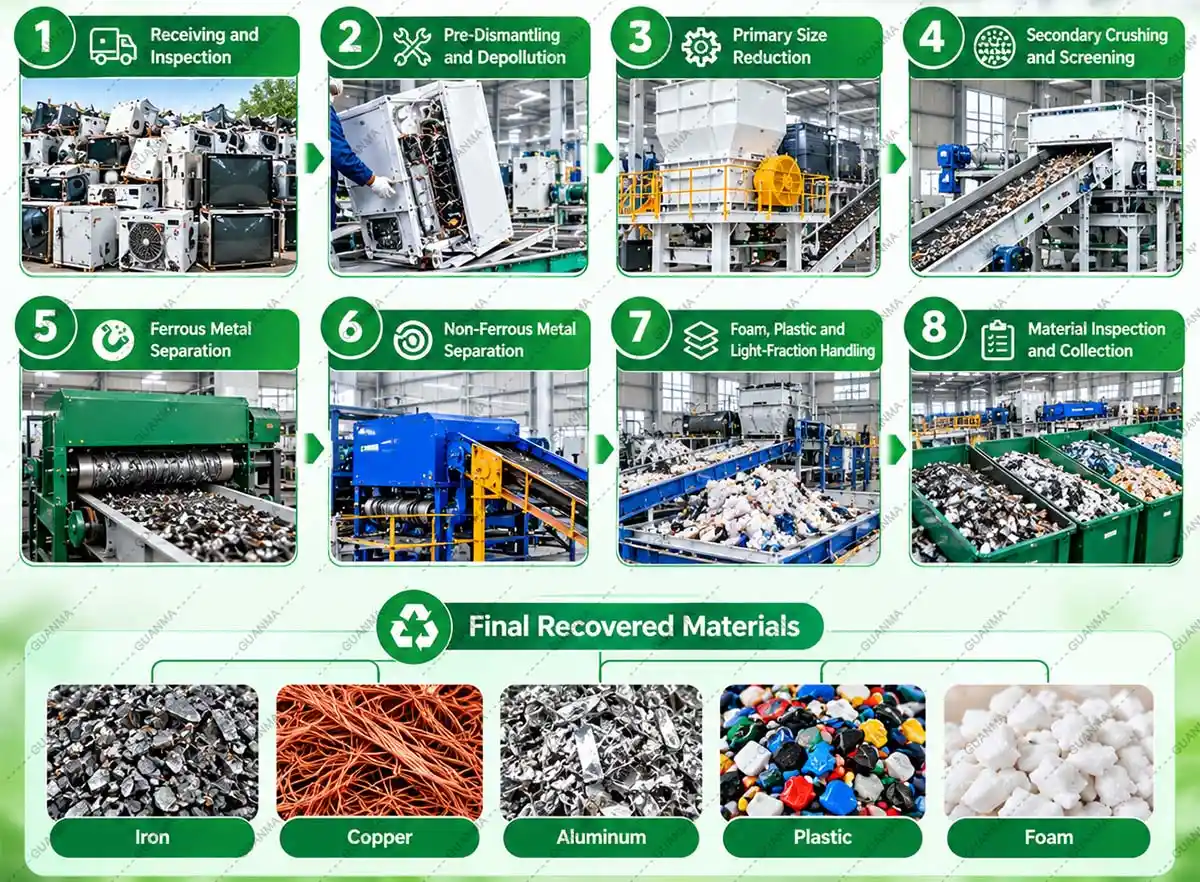
1. Receiving and Inspection
Inspect incoming appliances, identify material types and direct each category to its designated processing route.
2. Pre-Dismantling and Depollution
Remove selected components and recover refrigerants, oils or other controlled substances using suitable dedicated equipment where required.
3. Primary Size Reduction
Feed approved, appropriately pre-treated material to the selected shredder or crusher for controlled size reduction.
4. Secondary Crushing and Screening
Where required, further reduce material size and screen it to support downstream separation.
5. Ferrous Metal Separation
Use magnetic separation to extract iron and steel from suitable shredded material streams.
6. Non-Ferrous Metal Separation
Use suitable mechanical separation equipment, such as eddy-current separation, to recover applicable non-ferrous metal fractions.
7. Foam, Plastic and Light-Fraction Handling
Route insulation foam and lightweight fractions to their designated handling systems; add further plastic sorting or processing where specified.
8. Material Inspection and Collection
Collect and inspect the recovered fractions, then prepare them for storage, transport or subsequent recycling.
Home Appliance Recycling Line Technical Parameters
Guanma Machinery waste home appliance recycling machine manufacturer can customize recycling lines to meet your specific requirements.
| Item | Description |
|---|---|
| Processing Capacity | 800–1000 kg/h; 1200–1500 kg/h |
| Input Materials | Refrigerators, washing machines, air conditioners, televisions, and other household appliances |
| Output Materials | Iron, aluminum, copper, plastic, foam, etc. |
| Material Purity | Up to 99% (depending on materials and process) |
| Control System | PLC automatic control |
| Power Supply | 380V/50Hz (customizable) |
| Installation | On-site installation and commissioning |
Why Choose Guanma Machinery for Your Home Appliance Recycling Plant?
Choosing the right home appliance recycling plant manufacturer means more than comparing machine prices.
Direct Manufacturer
Direct communication about equipment, configuration and quotation.
Feedstock Assessment
Evaluate appliance types, throughput and target materials before equipment selection.
Customized Plant Design
Layout planning based on site conditions and project requirements.
Manufacturing & Inspection
Clear equipment specifications and applicable inspection information.
Installation & Training
Installation, commissioning and operator training according to the agreed scope.
After-Sales Support
Spare-parts supply, technical assistance and confirmed warranty terms.
Main Equipment for a Waste Appliance Recycling Plant
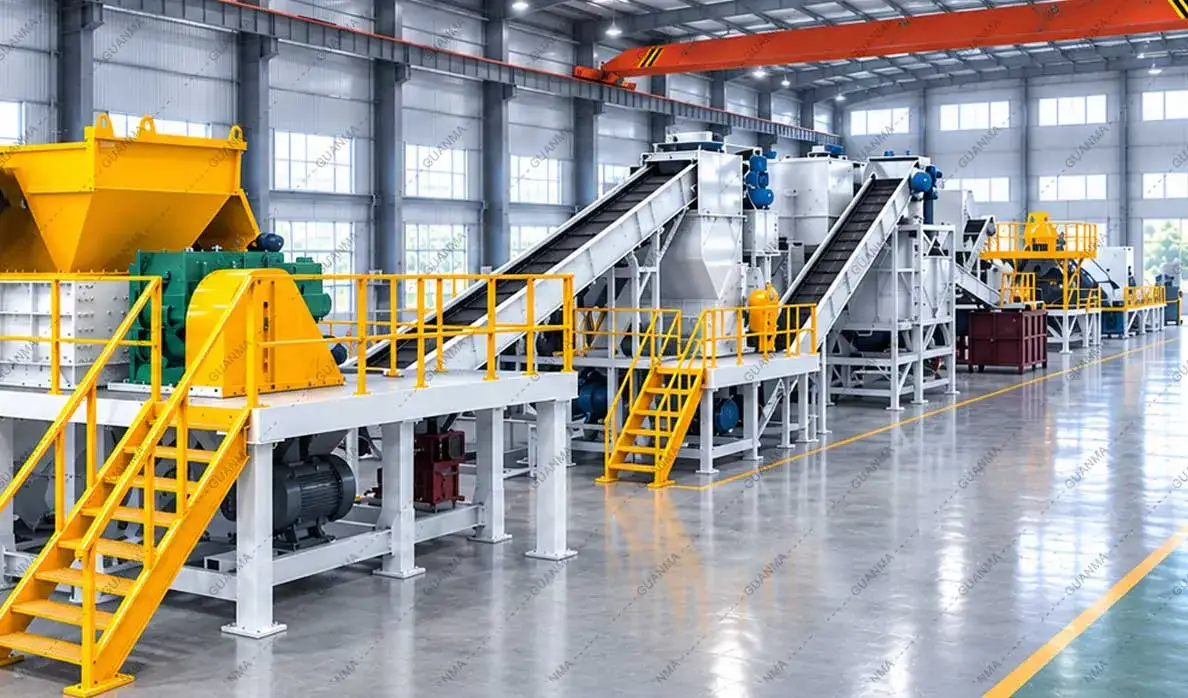
Pre-dismantling equipment: Remove selected components before size reduction.
Refrigerant recovery system: Recover applicable refrigerants through a dedicated process.
Primary shredder: Reduce suitable pre-treated appliances or components.
Secondary crusher and screen: Further size reduction and particle-size control.
Magnetic separator: Recover ferrous metals.
Eddy-current separator: Recover suitable non-ferrous metal fractions.
Air separator or other sorting equipment: Separate suitable lightweight or mixed material fractions.
Foam treatment equipment: Process designated insulation-foam fractions.
Plastic sorting / washing equipment: Improve plastic sorting or cleanliness to the specified target.
Dust collection and electrical control: Support dust control and equipment coordination.
Frequently Asked Questions About Home Appliance Recycling Lines
1. What appliances can a home appliance recycling plant process?
A home appliance recycling plant can be configured for refrigerators, freezers, washing machines, dryers, air conditioners, TVs and selected additional appliance categories. The processing route depends on the appliance type, required pre-treatment and the materials to be recovered.
2. What materials can a household appliance recycling plant recover?
Depending on the incoming appliances and equipment configuration, recovered fractions may include ferrous metals, copper, aluminum, selected plastics, glass, motors, compressors and electronic components. Refrigerants, oils, insulation foam and other controlled streams require suitable dedicated handling where applicable.
3. Can whole refrigerators be fed directly into the shredder?
Not without the appropriate pre-treatment. Refrigerators and other cooling appliances may contain refrigerants, oils and insulation materials requiring dedicated recovery or handling before size reduction. The treatment procedure must be specified for the incoming equipment and applicable requirements.
4. Can one appliance recycling plant handle refrigerators, washing machines and TVs together?
A plant can be designed around a mixed appliance feed, but that does not mean every item should follow the same processing route. Cooling appliances and different display types may require separate pre-treatment, dismantling or material-handling steps before shared downstream equipment is considered.
5. What is the difference between a home appliance recycling machine and a complete recycling line?
A home appliance recycling machine performs an individual task, such as shredding, screening or separating metals. A complete recycling line integrates the required equipment and material-handling stages into a coordinated process designed around the input materials and output requirements.
6. What processing capacity can the line achieve?
Capacity depends on appliance type, size, loading method, pre-treatment requirements, equipment configuration and the way throughput is measured. The appropriate target should be confirmed with the manufacturer using units per hour, mass throughput and the expected material mix.
7. Can the plant be customized for our factory?
The proposed configuration should be evaluated against the incoming material, capacity target, workshop dimensions, utilities and required output fractions. Share your basic project information to begin a configuration discussion and confirm the available engineering scope.
Planning a Home Appliance Recycling Plant?
Tell us what you need to process and what your project aims to recover. The engineering team can review the initial requirements and discuss a suitable equipment configuration.
Send the following information to get started:
- Types of appliances to be processed
- Estimated capacity or daily intake
- Target recovered materials
- Project country and available plant space