If you are planning a Hydrometallurgy battery recycling plant or looking to upgrade your black mass recycling line, understanding the hydrometallurgical recycling of lithium-ion battery materials is the first step toward a profitable and regulation-ready operation.
What Is Hydrometallurgy Battery Recycling?
Hydrometallurgy battery recycling refers to a wet-chemical extraction method that uses aqueous solutions – typically acids, alkalis, and solvents – to dissolve and selectively recover valuable metals from crushed battery powders, commonly called black mass.
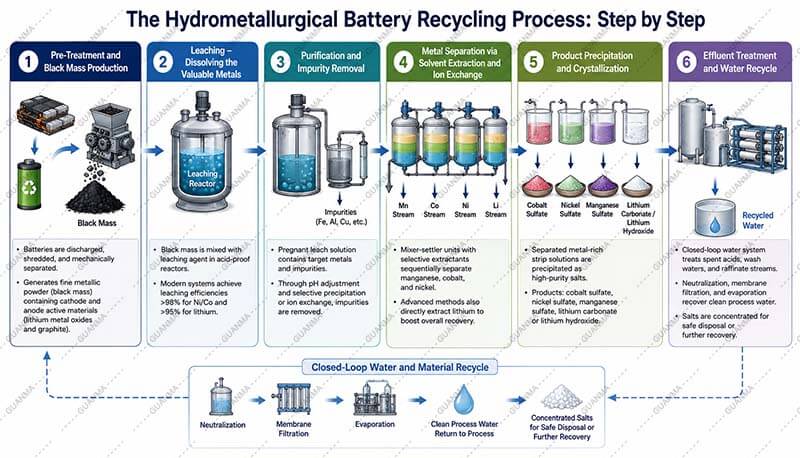
The Hydrometallurgical Battery Recycling Process: Step by Step
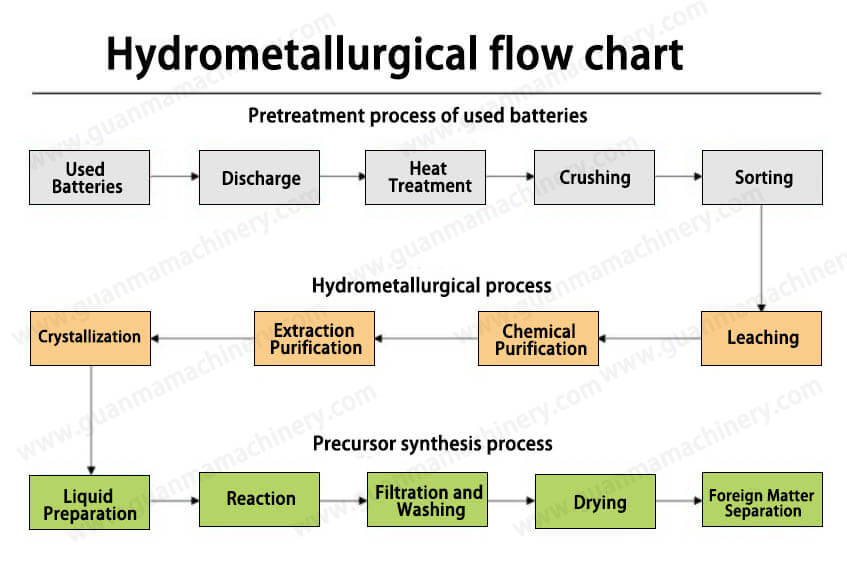
To truly optimize a hydrometallurgy battery recycling plant, you need to master each process stage. Below, we break down the complete flow from spent battery to pure metal salt.
1. Pre-Treatment and Black Mass Production
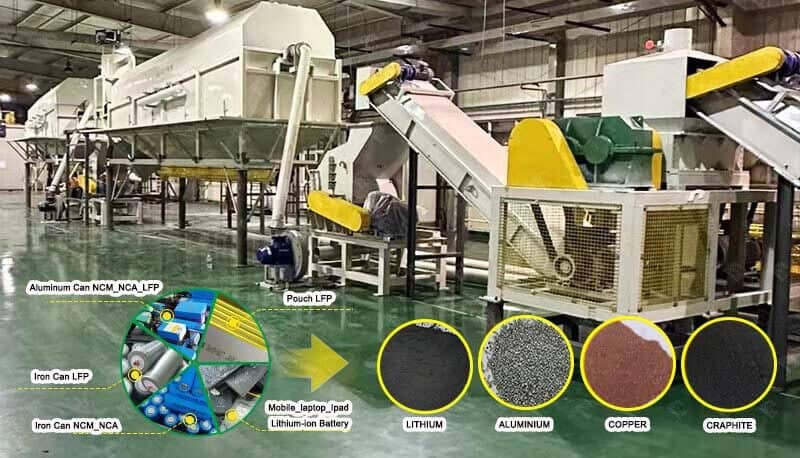
The hydrometallurgical battery recycling process does not start with whole cells. Batteries are first discharged, shredded, and mechanically separated to generate a fine metallic powder known as black mass. This powder contains the cathode and anode active materials – lithium metal oxides and graphite.

2. Leaching – Dissolving the Valuable Metals
In this stage of black mass hydrometallurgy battery recycling, the black mass is fed into acid-proof reactors and mixed with a leaching agent. Modern hydrometallurgical black mass recycling systems achieve leaching efficiencies above 98% for Ni/Co and over 95% for lithium.
3. Purification and Impurity Removal
The pregnant leach solution contains the target metals but also impurities like iron, aluminum, copper, and organic residues from electrolyte decomposition. Through controlled pH adjustment and selective precipitation or ion exchange, these impurities are removed.
4. Metal Separation via Solvent Extraction and Ion Exchange
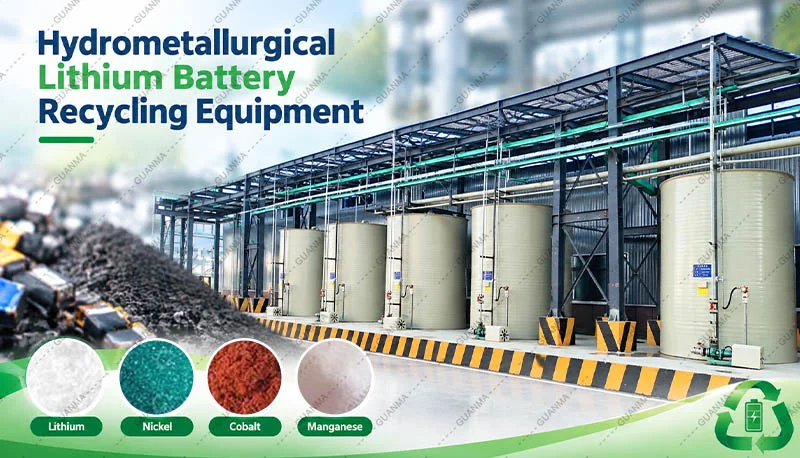
This is the core of hydrometallurgy battery recycling: mixer-settler units with selective extractants sequentially separate manganese, cobalt, and nickel into pure streams, while modern methods also directly extract lithium to boost overall recovery.
5. Product Precipitation and Crystallization
The separated metal-rich strip solutions are then precipitated as high-purity salts – cobalt sulfate, nickel sulfate, manganese sulfate, and lithium carbonate or lithium hydroxide.
6. Effluent Treatment and Water Recycle
Hydrometallurgy battery recycling facility incorporates a closed-loop water system. Spent acids, wash waters, and raffinate streams are treated through neutralization, membrane filtration, and evaporation to recover clean process water and concentrate salts for safe disposal or further recovery.
Guanma Machinery Partner for Black Mass Hydrometallurgy Recycling Equipment
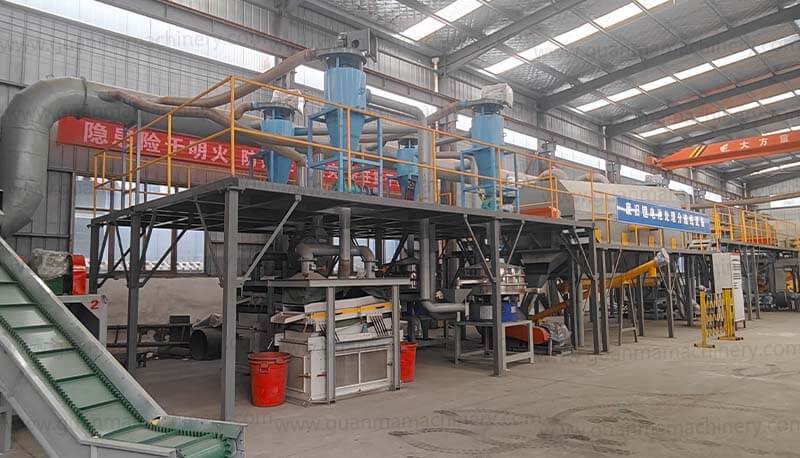
As a specialized black mass hydrometallurgy recycling equipment manufacturer, Guanma Machinery provides integrated solutions that cover the entire hydrometallurgy battery recycling process from black mass feeding to final metal salt packaging.
What sets Guanma Machinery’s hydrometallurgical equipment apart?
Black Mass Refining Modules
We deliver pre-assembled leaching, filtration, solvent extraction, and crystallization modules. Each unit is constructed with corrosion-resistant materials (such as titanium, duplex stainless steel, and PP/FRP) selected according to the specific chemical environment.
Intelligent Process Control
Our automation system monitors temperature, pH, ORP, and liquid levels in real time, adjusting dosing and mixing automatically. This level of control directly improves metal recovery rates, lowering your OPEX.
Flexible Configurations for Any Scale
Whether you are processing 500 tons or 20,000 tons of batteries per year, we design equipment lines that match your exact capacity needs. For hydrometallurgical recycling of lithium-ion battery materials including LFP, NMC and mixed scrap, our engineers tailor the extraction sequence to your feedstock.
Integrated Effluent Management
The Guanma Machinery system includes built-in wastewater treatment that recycles water and neutralizes acid, keeping your plant compliant with strict environmental standards.
End-to-End After-Sales Service
From installation and commissioning to operator training and long-term spare parts supply, our team ensures your hydrometallurgy battery recycling plant runs smoothly from day one.
By choosing purpose-built equipment from Guanma Machinery, you transform the complex hydrometallurgical battery recycling process into a streamlined, predictable, and highly profitable operation.
Start Building Your Hydrometallurgy Battery Recycling Plant Today
Contact Guanma Machinery today to discuss your project scale, receive a tailored engineering proposal, and learn how our black mass hydrometallurgy recycling equipment can accelerate your route to profitable battery material recovery.
Frequently Asked Questions About Hydrometallurgy Battery Recycling
What exactly is hydrometallurgical recycling of lithium-ion battery materials?
It is a chemical process that uses aqueous solutions to extract and purify valuable metals from the shredded, electrically-inactive powder (black mass) of spent lithium-ion batteries. It produces high-purity metal compounds ready for new battery manufacturing.
How does the hydrometallurgical battery recycling process compare to pyrometallurgy?
Pyrometallurgy smelts batteries at high temperatures and typically loses lithium and manganese to slag, with graphite being burned. The hydrometallurgy battery recycling process operates at much lower temperatures, recovers lithium and graphite, produces no heavy metal dust, and can economically treat lower-grade or mixed feedstocks.
What are the main steps in a hydrometallurgy battery recycling process?
The core steps are: pre-treatment to obtain black mass, acid leaching, solution purification (iron, aluminum, copper removal), sequential solvent extraction to separate cobalt, nickel, and manganese, and finally precipitation or crystallization to obtain lithium carbonate and other battery-grade metal salts.
What equipment is needed for hydrometallurgical processes for recycling spent lithium-ion batteries?
You need corrosion-resistant leaching reactors, filter presses, mixer-settler units for solvent extraction, ion exchange columns, crystallization systems, and integrated wastewater treatment modules. Guanma Machinery supplies complete production lines combining all these elements into a plant.
Can the hydrometallurgy battery recycling process handle LFP batteries?
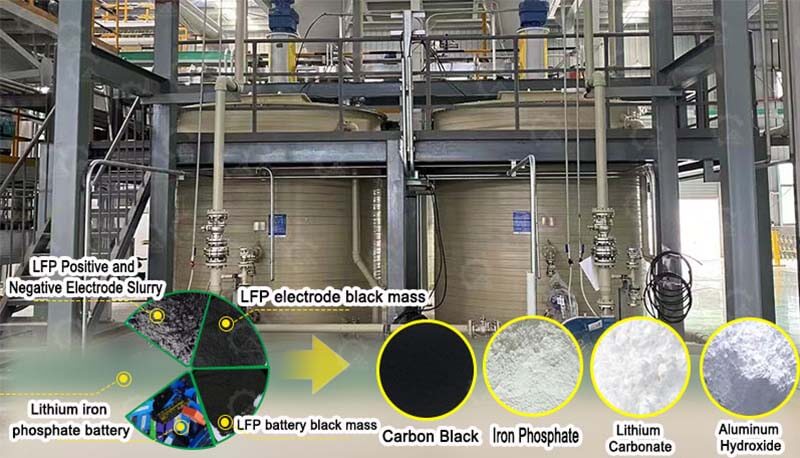
Absolutely. Although LFP batteries lack cobalt and nickel, the hydrometallurgical recycling of lithium-ion battery materials from LFP chemistries is extremely attractive for recovering high-purity lithium and producing iron phosphate byproducts. Our systems are designed with specific extraction protocols optimized for LFP black mass.
📩 Get Your Free Quote Today
Contact us today to discuss your project, capacity requirements, and target materials. Our team will reply within 24 hours with a customized proposal. You can also reach us directly at [email protected] — we are here to help!