Why Recycle Spent Lithium-Ion Batteries?
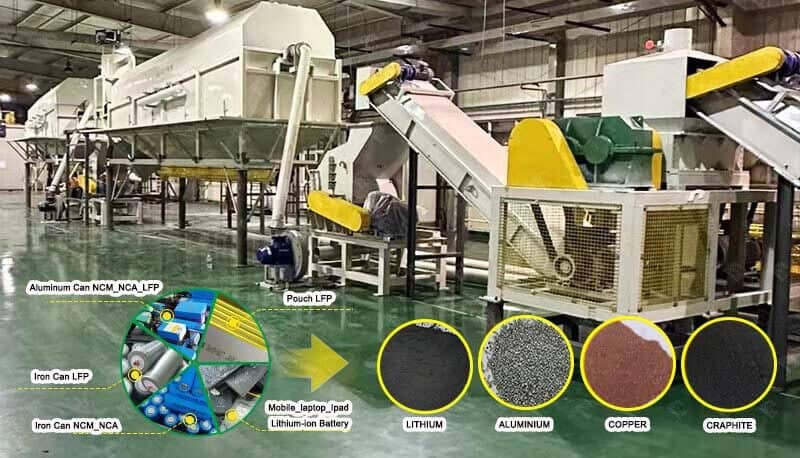
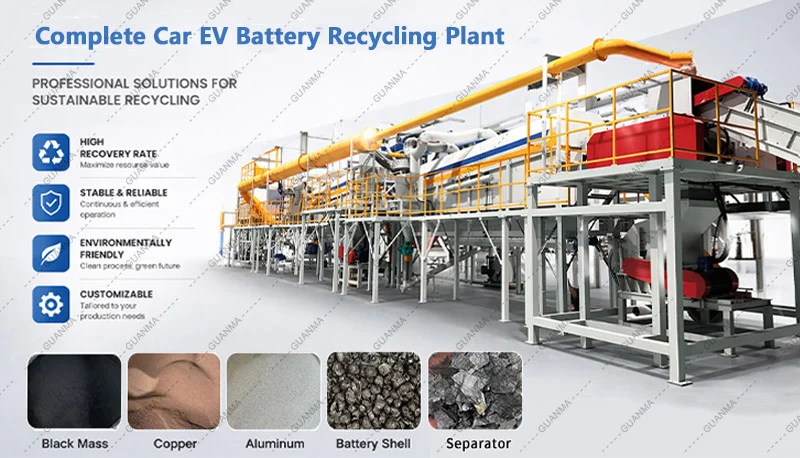
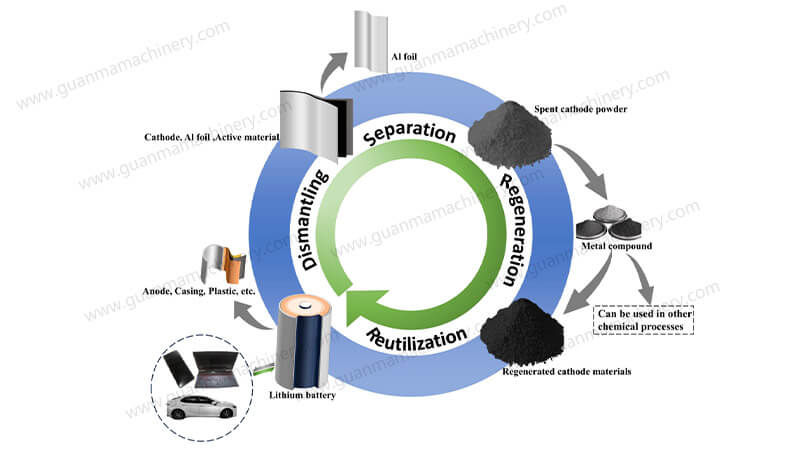
Spent lithium-ion batteries contain a significant amount of non-renewable and high-value heavy metals. The cathode material in these batteries is typically made of lithium cobalt oxide, while the anode material is graphite powder. Both the cathode and anode contain substantial amounts of valuable metals such as cobalt, nickel, manganese, copper, and aluminum. By effectively recycling and processing spent or defective lithium-ion batteries, not only can we reduce the environmental pressure caused by waste batteries, but we can also prevent the wastage of critical resources like cobalt, nickel, and manganese. Due to the scarcity of these resources and the need for environmental management, countries around the world place a high priority on the recycling and reuse of spent lithium-ion batteries.
📩 Get Your Free Quote Today
Contact us today to discuss your project, capacity requirements, and target materials. Our team will reply within 24 hours with a customized proposal. You can also reach us directly at [email protected] — we are here to help!