If you are planning to set up or upgrade a used lead-acid battery (ULAB) recycling facility, having a clear lead-acid battery recycling plant equipment list is the first step to building a safe, compliant, and profitable operation.
Lead-Acid Battery Recycling Plant Equipment
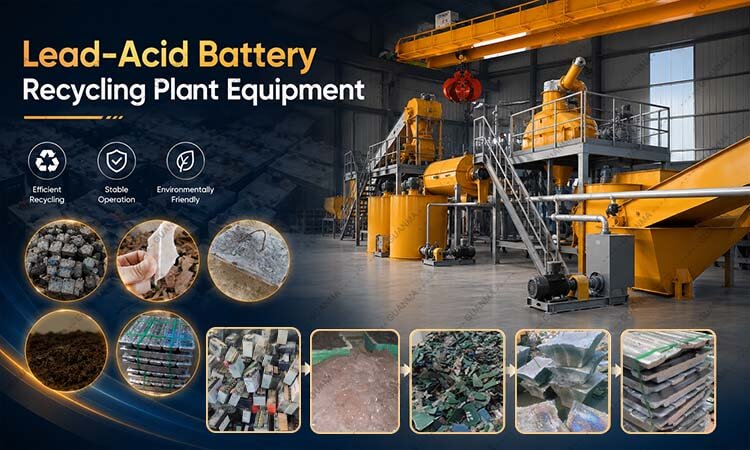
1. Battery Breaking & Separation System
Lead battery crushing and sorting line, this is the starting point. The fully automatic unit receives whole scrap batteries, crushes them in a hammer mill, and separates the components through a sink-float tank and vibrating screens. You will get:
Lead paste slurry (sent to desulfurization)
Metallic lead grids and poles (sent directly to the smelting furnace)
Polypropylene (PP) plastic scraps (sent to the plastic washing system)
Dilute sulfuric acid effluent (sent to the acid treatment plant)
2. Acid Treatment / Effluent Treatment Plant
The battery acid neutralization plant treats the dilute sulfuric acid collected during breaking. The treated water can be recycled back into the process or safely discharged, while the gypsum sludge is disposed of responsibly.
3. Plastic Washing & Drying Line
The separated PP fragments still carry lead dust and acid residue. A dedicated PP scrap washing line. The clean, dried plastic chips can then be sold to plastic recyclers.
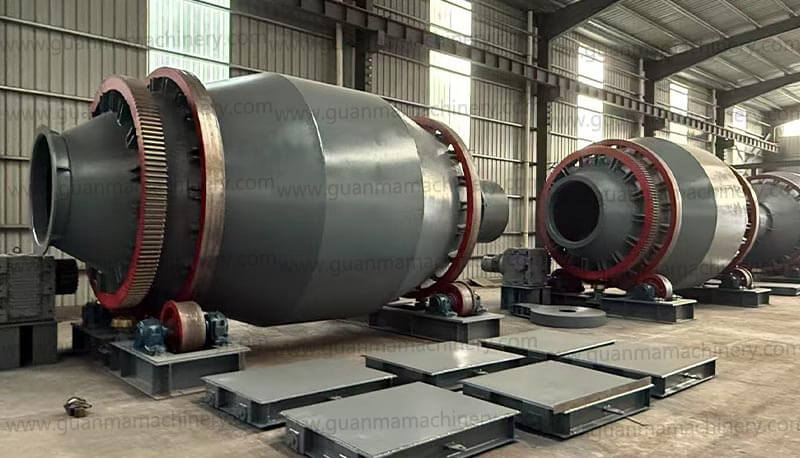
4. Paste Desulfurization System
Lead paste contains lead sulfate (PbSO₄). The paste desulfurization equipment reacts the lead paste slurry with a desulfurizing agent in stirred reactors, converting PbSO₄ into lead carbonate.
5. Smelting Furnace / Rotary Furnace
This is the heart of lead recovery. Most modern medium-to-large plants use a rotary furnace for lead smelting, fired by natural gas, heavy oil, or diesel. The rotary furnace design ensures uniform heating and high lead recovery rates. The output is crude lead bullion and slag.
6. Baghouse & Flue Gas Treatment System
The off-gases from the rotary furnace pass through:
A settling chamber or cyclone
A high-temperature baghouse filter to capture lead-bearing dust (returned to the furnace)
A wet scrubber or packed tower for SO₂ absorption
An activated carbon injection system for dioxin/mercury control if required by local regulations
The induced draft fan and stack monitoring system (CEMS) guarantee compliance with emission limits.
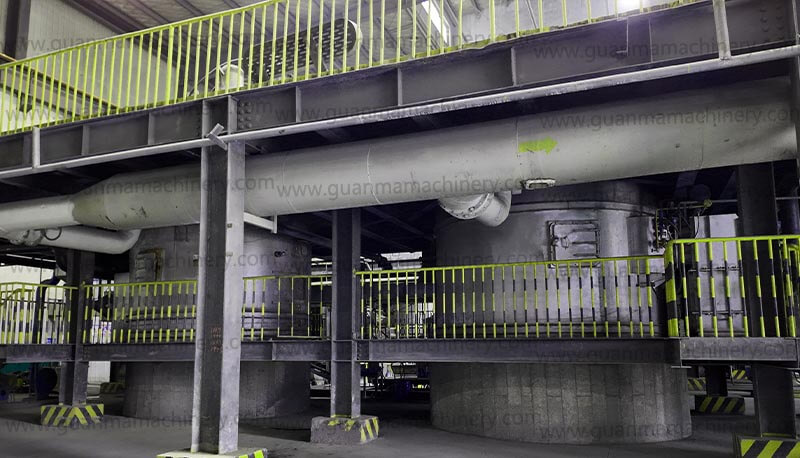
7. Refining Kettle/Refining Plant
The crude lead bullion contains impurities like copper, tin, antimony, arsenic, and bismuth. A set of lead refining kettles is used to carry out pyro-refining steps: drossing (copper removal), softening (tin/arsenic removal), and decopperizing.The result is lead (up to 99.985%) ready for final casting.
8. Lead Ingot Casting System
Automatic lead ingot casting machine turning refined lead into lead Ingot. The system includes a lead pump, dosing weir, ingot molds, cooling trough, stacking robot, and weighing station.
9. Auxiliary & Safety Equipment
Lead monitoring & alarm systems in the workplace
Backup generator for furnace burners
Water cooling towers for furnace and casting machine
Raw material & product weighing bridge
Start Your Lead Battery Recycling Plant Now
Contact Guanma Machinery to request the lead-acid battery recycling plant equipment list: from breaking and acid neutralization to rotary furnace smelting and lead ingot casting.
📩 Get Your Free Quote Today
Contact us today to discuss your project, capacity requirements, and target materials. Our team will reply within 24 hours with a customized proposal. You can also reach us directly at [email protected] — we are here to help!