Setting up a fully automatic lead-acid battery recycling plant in India is no longer just an environmental obligation; it is a high-margin industrial opportunity.
As a specialized manufacturer of lead recycling plants, guanma machinery have engineered solutions specifically for the Indian subcontinent’s operational environment—high ambient temperatures, variable grid power, and stringent Central Pollution Control Board (CPCB) norms.
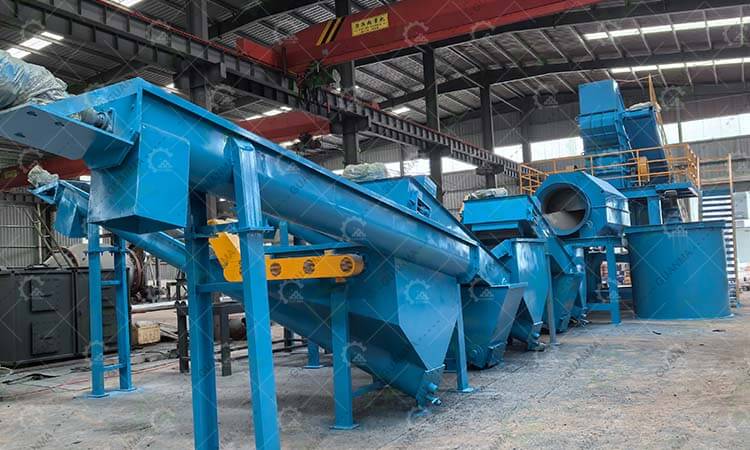
Why “Fully Automatic Lead Acid Battery Recycling Plant” is Non-Negotiable in the Indian Context
From the moment a scrap battery is placed on the input conveyor, no human hand touches the lead again until it is a refined 99.98% pure ingot. This level of automated lead acid battery recycling machinery is crucial for:
- Compliance: Meeting CPCB guidelines for emission standards (Particulate Matter < 10 mg/Nm³).
- Safety: Eliminating occupational lead exposure hazards.
- Efficiency: Achieving consistent recovery rates unattainable with batch-style manual furnaces.
Below, we address the specific queries clients ask before setting up a lead battery recycling factory in India.
Lead Acid Battery Recycling Machine Capacity
Indian recyclers range from regional collection centers processing 5 metric tons per day (TPD) to large smelters handling over 100 TPD. Our modular automatic battery breaker and separation system is available in the following standardized configurations: 5ton/h, 10ton/h, 20ton/h etc.
Note: We also offer custom automatic lead recycling plant capacity expansion modules if you plan to start small and scale up.
Complete Plant Cost (Machine + Installation)
The investment for setting up a fully automatic lead-acid battery recycling plant in India varies based on capacity and the inclusion of downstream refining.
What this includes:
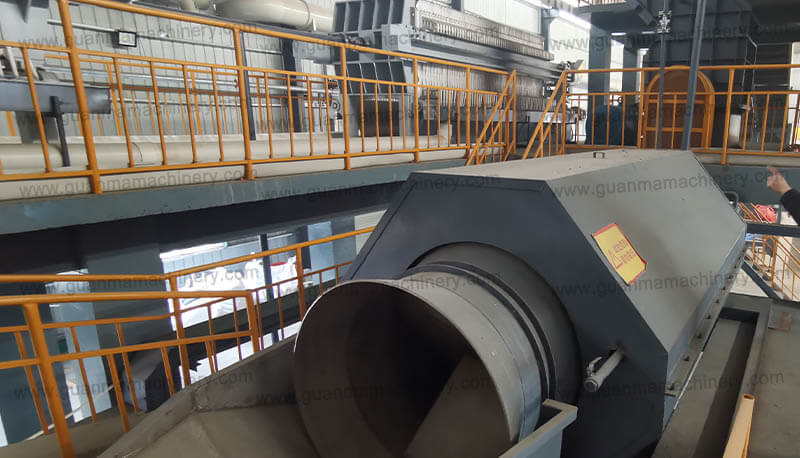
Main Machinery (Breaker, Hydro-Separator, Rotary Furnace, Refining Pots).
Complete Pollution Control System (Air, Water, Slag).
Electrical & Automation (PLC Panels, SCADA Interface).
On-Site Installation & Commissioning Supervision by our engineers.
Level of Automation
Our fully automatic battery recycling plant process eliminates all manual sorting and breaking.
Automatic Feeding
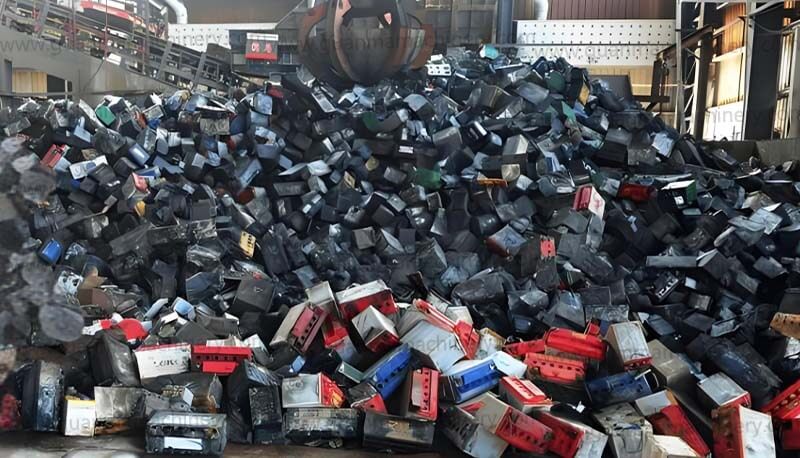
Scrap batteries are loaded via a conveyor or grapple directly into an enclosed Hammer Mill Crusher.
Automated Hydro-Separation
Crushed material passes through a sink-float system. The heavy lead paste and grids are separated from the lighter PPCP plastic and hard rubber (ebonite) . This separation is closed-loop and wet, suppressing dust.
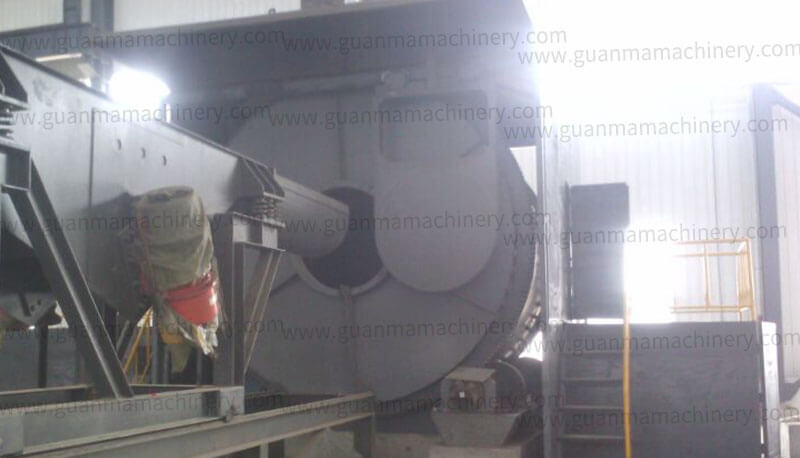
PLC-Controlled Smelting
Material is batch-fed via screw conveyors directly into the Rotary Furnace.
Automatic Ingot Casting
Molten lead is tapped via automated controls into a continuous casting machine with weight feedback.
Pollution Control System (Air, Water, and Slag Handling)
Compliance with lead acid battery recycling pollution control equipment India standards is where many projects fail. Our system is a Triple-Layer Defense:
Air Emissions
Baghouse Filter: Captures >99.9% of particulate lead dust from crushing and furnace off-gas.
Wet Scrubber: Removes Sulfur Dioxide (SO₂) generated during battery breaking and smelting.
Activated Carbon Injection: For Dioxin/Furan control (required in some states for mixed plastic waste).
Water Management
The lead acid battery breaking and separation unit uses water in a closed loop. No contaminated water leaves the plant boundary.
Slag Handling
The rotary furnace for lead smelting generates slag. We provide a Slag Cooling Conveyor and Metal Recovery Plant. Slag is non-hazardous inert material and can be sold to cement industries or used in road construction.
Output Recovery Rate & Lead Purity
Metal Recovery Efficiency
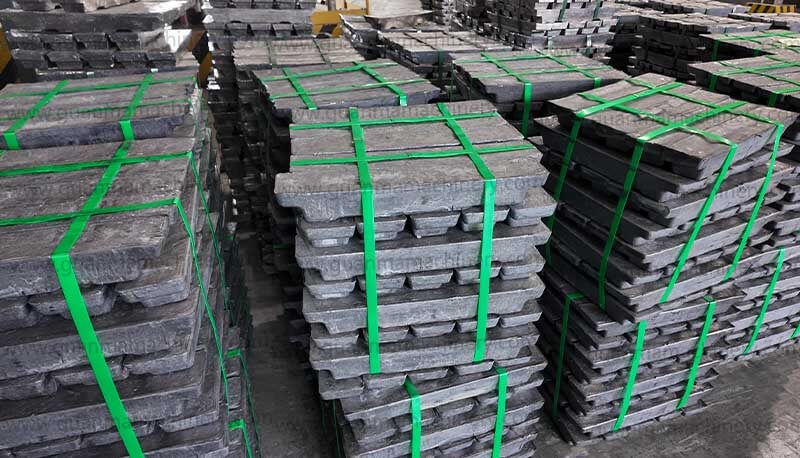
Our automatic battery recycling plant consistently achieves >99% lead recovery from the input battery scrap.
Lead Purity
After passing through the Refining Kettle, we guarantee a final product purity of 99.97% to 99.99% Pb. This meets LME (London Metal Exchange) Grade A specifications, allowing you to sell directly to battery manufacturers.
6. Installation Time and Commissioning
- Equipment Manufacturing: 60-120 Days from PO confirmation.
- Shipping & Customs Clearance: 8-15 Days.
- Installation & Mechanical Erection: 5-15 Days.
- Commissioning & Trial Runs: 10 Days.
7. Warranty and Maintenance Details
Standard Warranty: 12 Months from date of commissioning or 18 Months from shipment (whichever is earlier).
Consumables Excluded: Furnace refractory lining, crusher wear hammers, and filter bags are consumable items. We provide a detailed Maintenance Schedule listing expected life (e.g., Refractory life: 6-8 months continuous operation).
8. Videos, Layout Drawings
Since this is a capital-intensive project for starting a lead recycling business in India, we provide the following pre-contract documentation:
3D Layout Drawings (AutoCAD & SolidWorks)
You will receive a General Arrangement (GA) drawing showing the exact footprint of the fully automatic lead battery recycling line within your proposed shed. We map out truck movement, scrap yard placement, and operator cabin location.

Plant Operation Video
We can share a confidential video walkthrough of a recent 50 TPD lead acid battery recycling plant we commissioned, showing the automatic battery breaker in real-time operation.
Why Choose Our Engineering Over Local Fabricators?
The Indian market has many local fabricators offering furnaces, but few can integrate PLC automation with CPCB-grade pollution control.
Competitor Weakness: Manual battery breaking leads to 5-7% lead loss in plastic scrap.
Our Advantage: Automated Hydro-separation with 99.985% efficiency.
Ready to Set Up Your Recycling Plant in India?
Setting up a fully automatic lead-acid battery recycling plant in India is a significant investment that pays dividends in operational safety, regulatory peace of mind, and higher yield.
Contact Guanma Machinery Today for a Customized Feasibility Quote.
📩 Get Your Free Quote Today
Contact us today to discuss your project, capacity requirements, and target materials. Our team will reply within 24 hours with a customized proposal. You can also reach us directly at [email protected] — we are here to help!