Are you planning on setting up a lithium-ion battery recycling plant machine? equipment you choose will determine your plant’s efficiency, safety, and profitability.
What is a Lithium-Ion Battery Recycling Plant Machine?
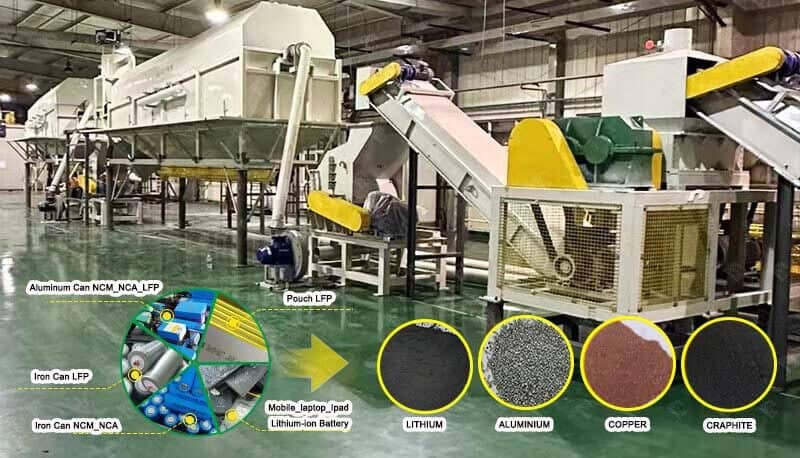
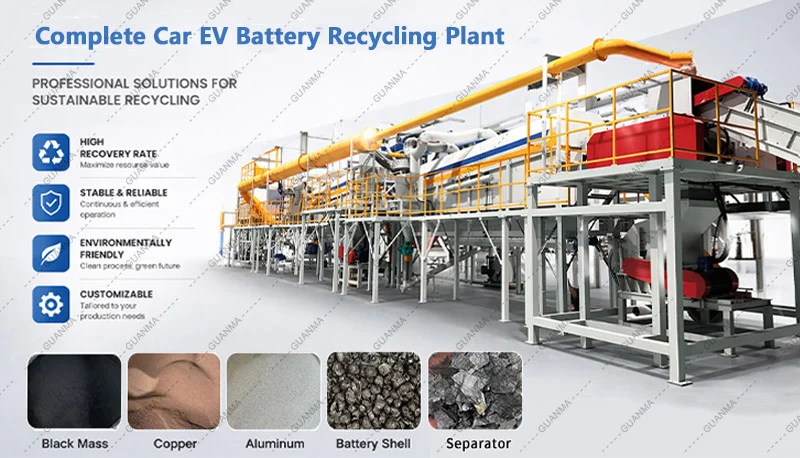
A complete lithium-ion battery recycling plant machine is more than just a shredder. It is a fully integrated system that safely discharges, crushes, separates, and recovers valuable materials such as lithium, cobalt, nickel, copper, and aluminum.
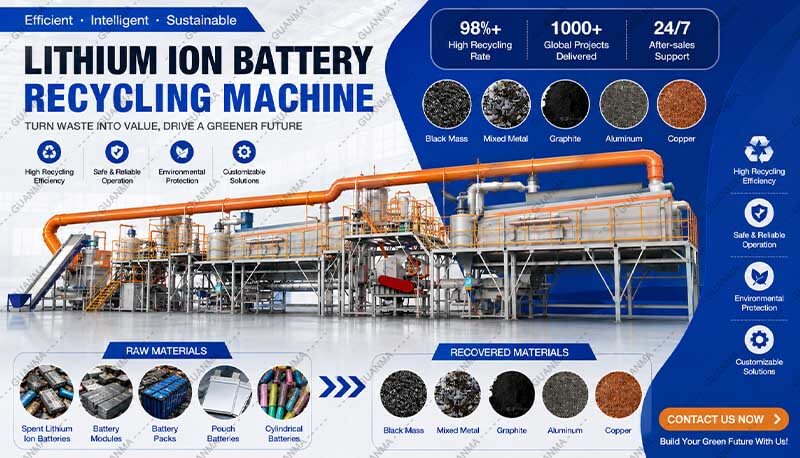
Why the Right Lithium-Ion Battery Recycling Machine Matters
Whether you are launching a mid-scale facility or a large industrial lithium battery recycling plant, Without properly engineered machinery, you risk thermal runaway, low recovery rates, environmental penalties, and costly downtime.
Core Machinery for a Lithium-Ion Battery Recycling Plant
To efficiently turn scrap batteries into sellable black mass and sorted metals, your setup should include these interconnected machines.
1. Pre-Treatment and Discharge System
Before any crushing occurs, spent lithium-ion batteries must be safely discharged to eliminate residual charge. A dedicated battery discharging machine with a conductive salt discharge rack brings cells to a safe voltage.
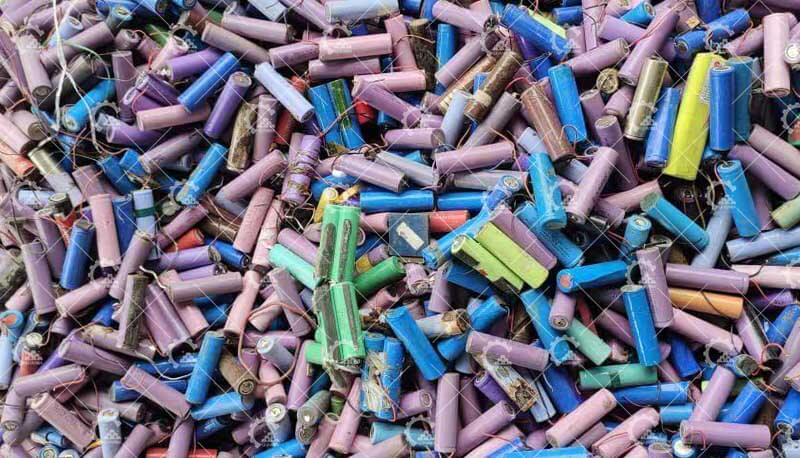
2. Primary Dual-Shaft Shredder
The heart of any lithium-ion battery recycling line is the dual-shaft shredder. An inert atmosphere (nitrogen or CO₂ injection) is a must for fire prevention. The shredded output is typically 30–60 mm fragments, ready for secondary size reduction.
3. Secondary Hammer Crusher
Hammer crusher reduces the fragments to 2–10 mm particles. A closed-loop system with a cyclone collector feeds the material to the separation stage. This is where black mass separation equipment becomes critical — the machine must maximize the detachment of lithium metal oxides from copper and aluminum foils without over-pulverizing the metals.
4. Multi-Stage Separation System
Achieving high-purity black mass requires a combination of:
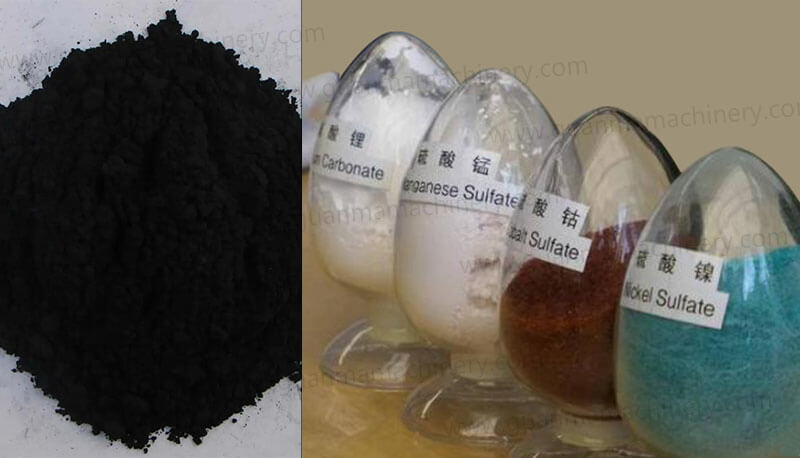
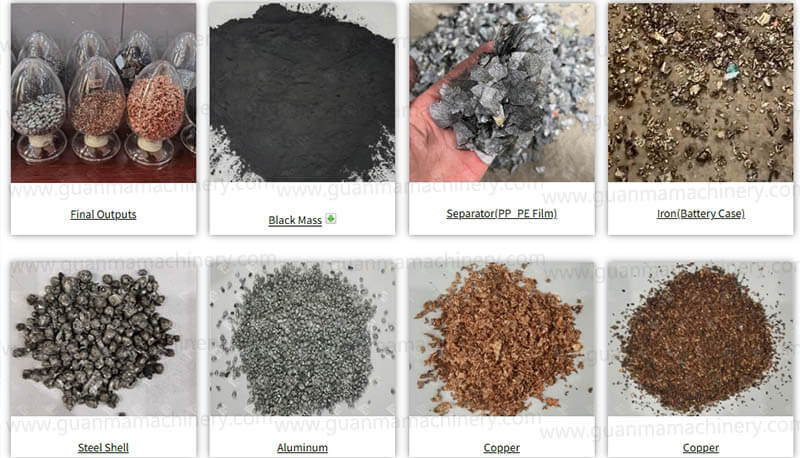
Magnetic separation: Recovers ferrous metal particles (iron from casings).
Separator: Isolates non-ferrous metals such as copper and aluminum.
Air separation: Separates lightweight anode/cathode powders from heavier metal flakes.
Vibrating screens and rotary sifters: Classify black mass into different particle sizes for higher market value.
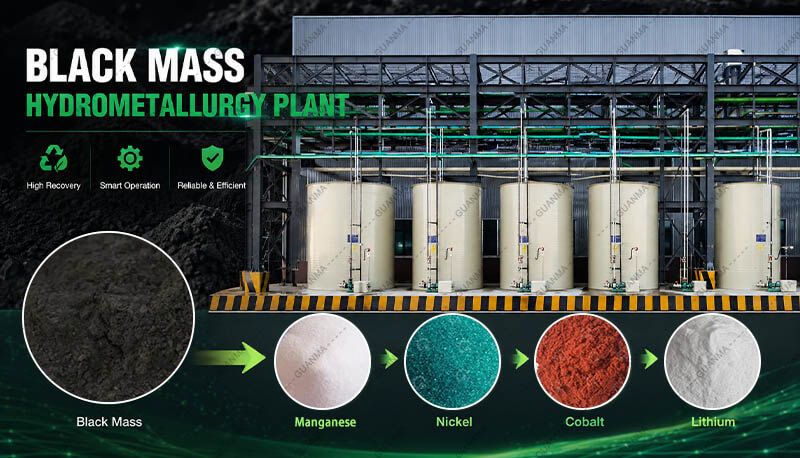
A well-designed lithium-ion battery crushing and separation line will ensure a recovery rate above 99% for copper and aluminum and a black mass purity that meets black mass hydrometallurgy plant specifications.
5. Electrolyte Recovery and Gas Treatment
As batteries are opened, volatile organic compounds (VOCs) from the electrolyte are released. A condensing unit traps and recovers these solvents, while a high-capacity activated carbon filter or regenerative thermal oxidizer (RTO) treats the exhaust gas.
6. Dust Collection and Intelligent Control
A centralized pulse-jet dust collector keeps the workshop clean and safe. All machines are tied together by a PLC-based control panel that monitors temperature, oxygen levels, and motor loads in real time. This enables a single operator to manage the entire line.
Long-Tail Considerations When Setting Up Your Plant
When you start reaching out to lithium-ion battery recycling machine manufacturers, ask specific questions that go beyond basic specifications.
Machine compatibility with multiple battery types
Can the same line process both NMC and LFP cells? A flexible EV battery recycling plant machinery setup will future-proof your business as battery chemistries evolve.
Explosion-proof design standards
Are anti-explosion vents and flame arrestors included? This is non-negotiable when setting up a lithium-ion battery recycling plant machine for industrial-scale operation.
Throughput and scalability
Common capacities range from 500 kg/h to 3,000 kg/h. Calculate your expected feed volume and choose a modular design that allows you to add equipment later without replacing the entire line.
Wear parts cost and life
Blades, hammers, and screen meshes are consumables. Request a realistic replacement interval and per-ton operating cost.
Installation and training
Does the supplier offer on-site commissioning and operator training?
Starting a Profitable Battery Recycling Business
Setting up a lithium-ion battery recycling plant machine is a highly rewarding venture.
If you are evaluating lithium-ion battery recycling machine prices, need a custom flow chart, or want to visit an existing installation, contact guanma machinery today. We deliver cover every machine required to start and scale your lithium-ion battery recycling plant.
📩 Get Your Free Quote Today
Contact us today to discuss your project, capacity requirements, and target materials. Our team will reply within 24 hours with a customized proposal. You can also reach us directly at [email protected] — we are here to help!