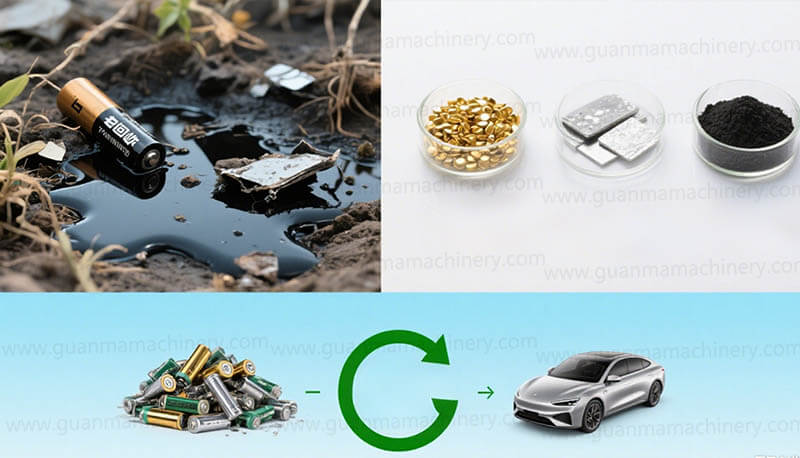
Wondering about the lithium ion battery recycling plant cost in India? As India surges forward in EV adoption and electronics consumption, the demand for sustainable, profitable battery recycling solutions is exploding. Understanding the investment required is crucial.
Why Invest in Lithium-Ion Battery Recycling in India?
India’s massive market, supportive government policies, and growing raw material scarcity make battery recycling a strategic and environmentally critical industry. Recovering valuable metals like lithium, cobalt, nickel, and copper isn’t just green – it’s economically compelling.
Breaking Down the Lithium Ion Battery Recycling Plant Cost in India
The total investment isn’t a single figure; it’s a combination of several major components:
1. Recycling Machinery & Technology (The Core Investment)
This is typically the largest portion of your capital expenditure (CapEx).
Costs vary dramatically based on:
Capacity: Small-scale (1-2 tons/day) vs. Medium/Large-scale (5+ tons/day). Higher capacity means higher machinery costs.
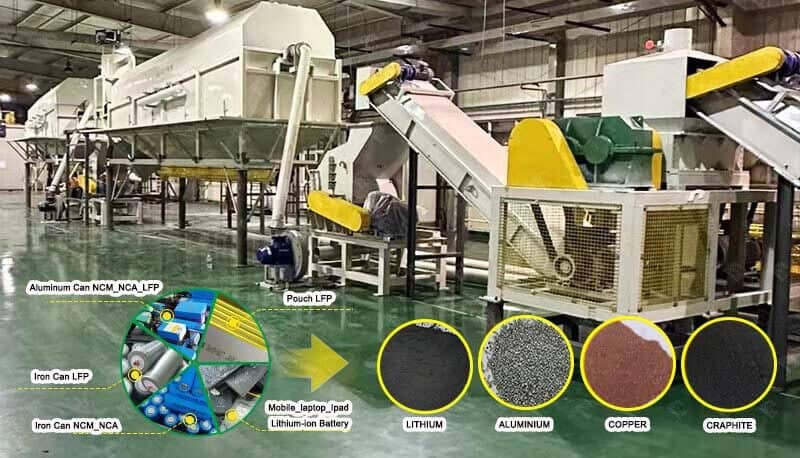
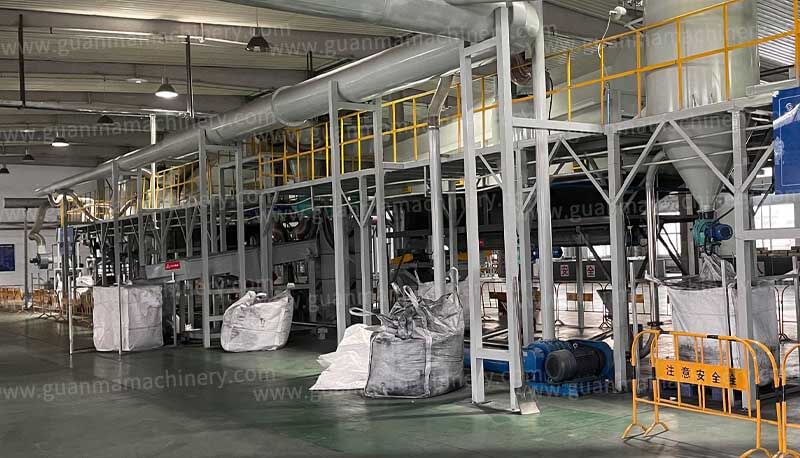
Technology & Automation Level: Basic Manual/Semi-Automated: Lower initial cost, higher labor reliance. Involves shredders, crushers, basic separation units.
Advanced Automated: Higher cost, significantly better efficiency, safety, recovery rates, and purity. Includes sophisticated shredding systems, inert atmosphere processing (critical for safety), advanced hydrometallurgy/pyrometallurgy units, automated sorting (NIR sensors), and sophisticated pollution control systems.
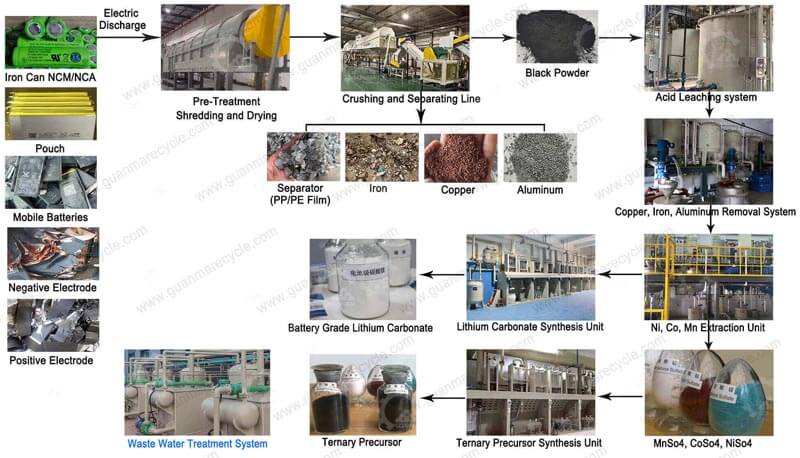
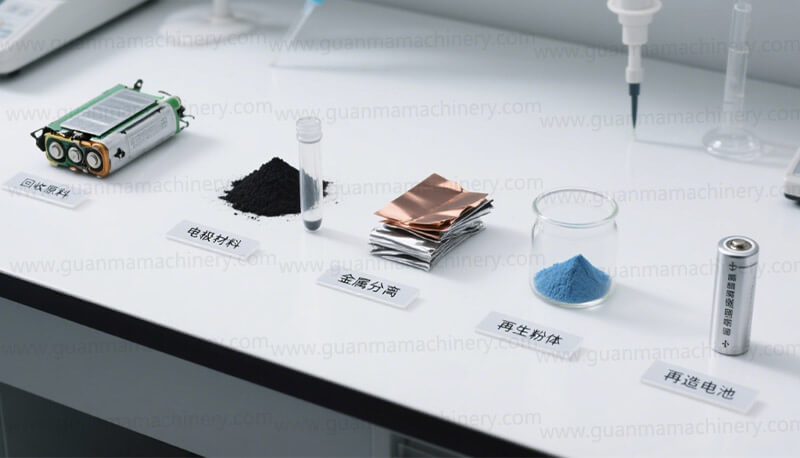
Process Type: Pyrometallurgy (high-temp smelting), Hydrometallurgy (chemical leaching), or Mechanical Pre-processing + Hydrometallurgy (most common and environmentally preferred for Li-ion).
Quality & Origin: Reputable brands like Guanma Machinery offer robust, efficient systems designed for the specific challenges of Li-ion batteries, ensuring better uptime, recovery rates, and safety – a crucial long-term investment.
2. Plant Setup & Infrastructure
Land: Cost varies hugely by location (industrial zones near urban centers vs. outskirts). Leasing or purchasing.
Factory Building: Construction or modification costs, including specific requirements like explosion-proof sections, ventilation, chemical storage, and drainage systems.
Utilities: Significant power requirements for shredders and furnaces. Water supply for hydrometallurgy. Effluent treatment plant (ETP) setup is mandatory.
Licensing & Permits: Environmental clearances (EC), CTE/CTO, fire NOC, hazardous waste handling authorization, factory license – fees and consultancy costs.
3. Operational Expenditure (OpEx)
Raw Material (Used Batteries): Establishing collection networks, logistics, and purchase costs per ton.
Labor: Skilled technicians, engineers, chemists, plant operators, and safety personnel. Automation reduces long-term labor costs.
Chemicals & Consumables: Acids, solvents, reagents (for hydrometallurgy), PPE, shredder blades, filters.
Energy: Major cost factor – electricity and fuel.
Maintenance: Regular servicing of complex machinery is essential for safety and efficiency.
Waste Disposal: Safe disposal of residual slag, plastics, electrolytes, and process residues as per PCB norms.
Logistics: Transporting collected batteries and selling recovered materials (black mass, metals).
Compliance & Testing: Regular emissions monitoring, effluent testing, safety audits.
4. Technology & R&D
Continuous improvement in recovery efficiency and purity often requires investment in R&D or licensing newer technologies.
Critical Factors Impacting Your Lithium Ion Battery Recycling Plant Cost in India
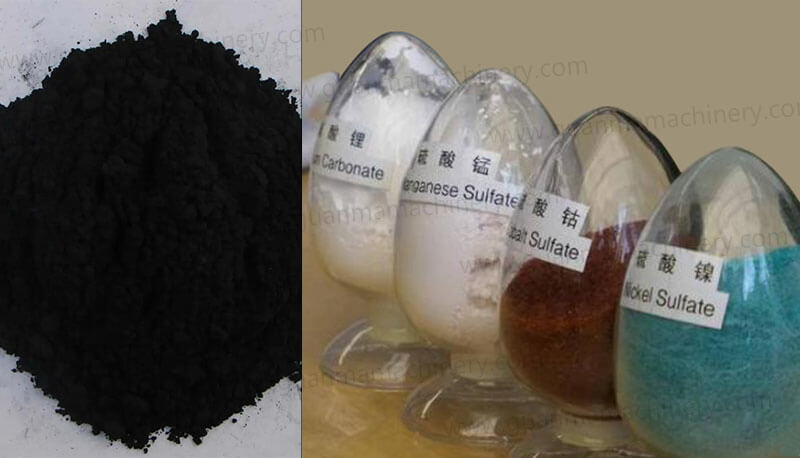
Desired Output Quality: Higher purity metals (battery-grade) require significantly more sophisticated (and expensive) refining technology than just producing black mass.
Automation vs. Labor: Higher automation means higher CapEx but lower long-term OpEx (labor) and enhanced safety/consistency.
Location: Land cost, proximity to battery collection hubs/material markets, labor costs, utility costs, and local regulations vary.
Regulatory Compliance: Cutting corners on safety (explosion-proofing, gas detection) or pollution control (advanced ETP, scrubbers) is illegal and dangerous. Proper compliance is a significant but non-negotiable cost.
Supplier Choice: Partnering with experienced, reputable machinery suppliers like Guanma Machinery ensures reliable technology, proper support, and designs meeting Indian safety and environmental standards, impacting long-term viability and cost-effectiveness.
Beyond Cost: Ensuring Success
Robust Collection Network: Securing a consistent supply of used batteries is fundamental.
Off-Take Agreements: Securing buyers for your recovered materials (black mass, metals) stabilizes revenue.
Skilled Workforce: Technical expertise is vital for safe and efficient operation.
Focus on Safety: Li-ion batteries are hazardous. Invest heavily in safety protocols, training, and equipment.
Partner for a Sustainable and Profitable Future
Understanding the lithium ion battery recycling plant cost in India is the vital first step. Guanma Machinery delivers cutting-edge, reliable, and safe battery recycling solutions engineered for efficiency and high recovery rates.
Contact Guanma Machinery today for a detailed consultation and competitive quotation on optimized lithium-ion battery recycling solutions for the Indian market.
📩 Get Your Free Quote Today
Contact us today to discuss your project, capacity requirements, and target materials. Our team will reply within 24 hours with a customized proposal. You can also reach us directly at [email protected] — we are here to help!