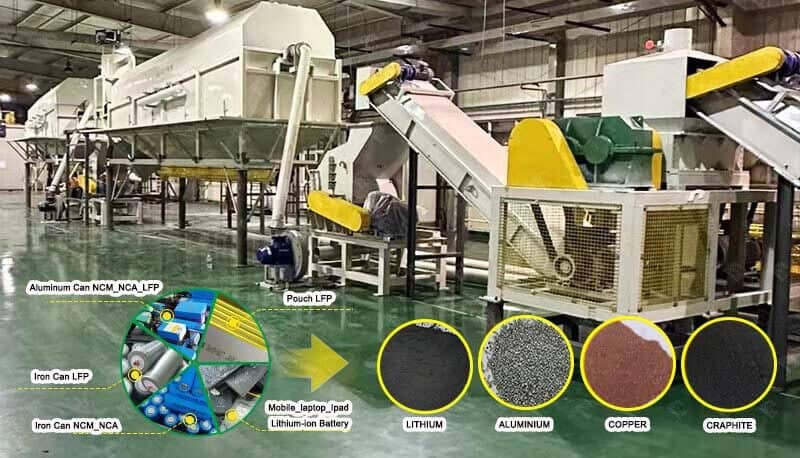
The lithium battery recycling process starts with battery preparation—discharging, dismantling, crushing, sorting, separation and black mass recovery.
Why the Lithium Battery Recycling Process Matters
The global shift to electric vehicles and energy storage has created a rapidly growing stream of used lithium-ion batteries. Without proper processing, these batteries pose serious risks: fires, toxic chemical leakage and the loss of critical metals like lithium, nickel, cobalt and copper.

A well-designed lithium battery recycling plant solves three problems at once:
Safety: Controlled discharge and crushing reduce fire and explosion hazards.
Resource recovery: High-purity black mass, copper and aluminum can be sold back into the supply chain.
Compliance: Proper processing helps you meet environmental and transportation regulations in your market.
For recyclers, the real question is not whether to recycle, but how to build a process that is efficient, safe and profitable.
Overview of the Battery Recycling Steps
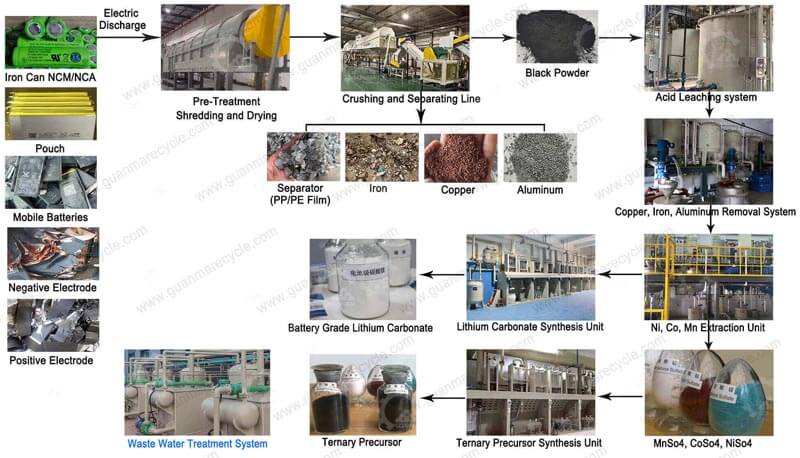
Here is the typical flow of a modern lithium-ion battery recycling process:
Step 1: Battery Collection
Batteries arrive from many sources: consumer electronics, power tools, e-bikes, hybrid vehicles and full electric vehicles. They come in different chemistries (LFP, NMC, LCO, etc.), shapes (cylindrical, prismatic, pouch) and states of charge.
Step 2: Battery Sorting and Preparation
Sorting at this stage is critical. Mixing chemistries too early can lower the value of your recovered black mass and complicate downstream refining.
Step 3: Battery Discharging
Batteries must be discharged before mechanical processing. A residual charge can cause sparks, short circuits or fires during crushing. Common methods include:
- Saltwater or conductive solution discharge
- Resistive discharge racks
- Cryogenic or inert-atmosphere handling for large packs
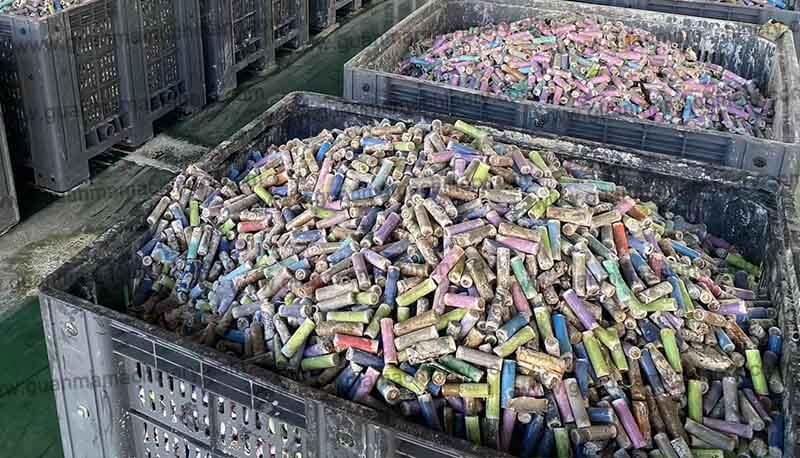
Step 4: Dismantling and Crushing
Large EV battery packs are usually dismantled into modules and cells. This step improves the efficiency of downstream battery crushing and separation and reduces contamination.
Step 5: Battery Crushing and Separation
In a typical lithium battery recycling plant, crushing is performed in a sealed, inert-gas or nitrogen-purged environment to prevent fire and explosion. After crushing, the material stream contains:
- Black mass (fine powder containing lithium, nickel, cobalt, manganese)
- Copper and aluminum foil fragments
- Plastic and separator pieces
- Steel casing fragments
Separation equipment then uses differences in size, density, magnetism and conductivity to split these materials.
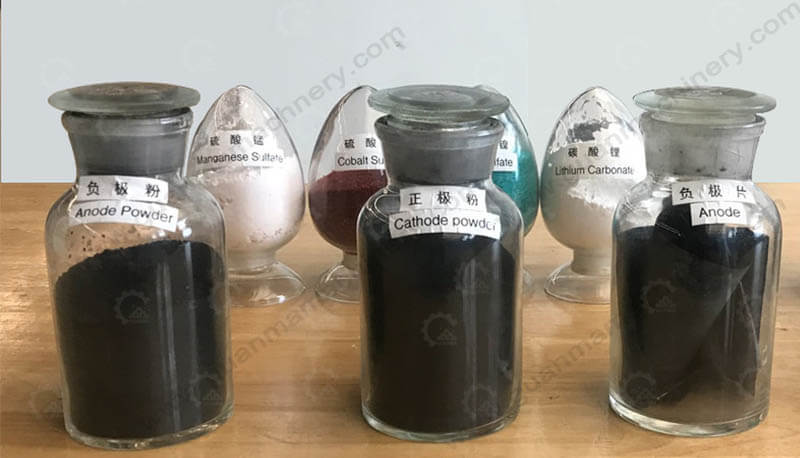
Step 6: Black Mass Recovery and Refining
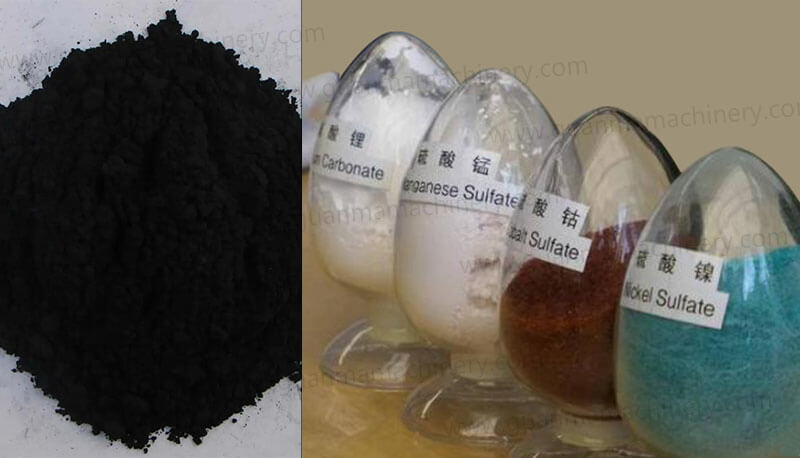
What is black mass?
Black mass is the fine, dark powder recovered after crushing and separation. It contains the most valuable part of the battery: lithium, nickel, cobalt, manganese and graphite.
Black Mass Recovery Methods
There are two main routes for further processing:
Pyrometallurgy: High-temperature smelting recovers metals as alloys.
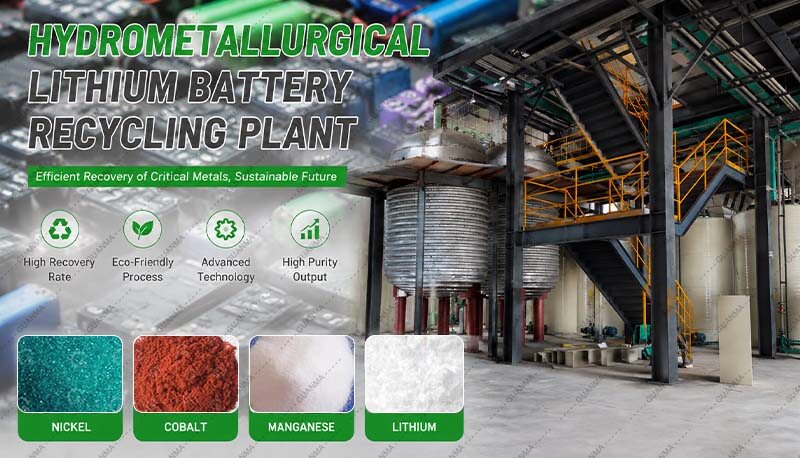
Hydrometallurgy: Chemical leaching and solvent extraction recover individual metals with high purity.
Many modern lithium battery recycling plants produce black mass on-site and ship it to specialized refiners. Others integrate black mass hydrometallurgical plant to produce battery-grade chemicals directly.
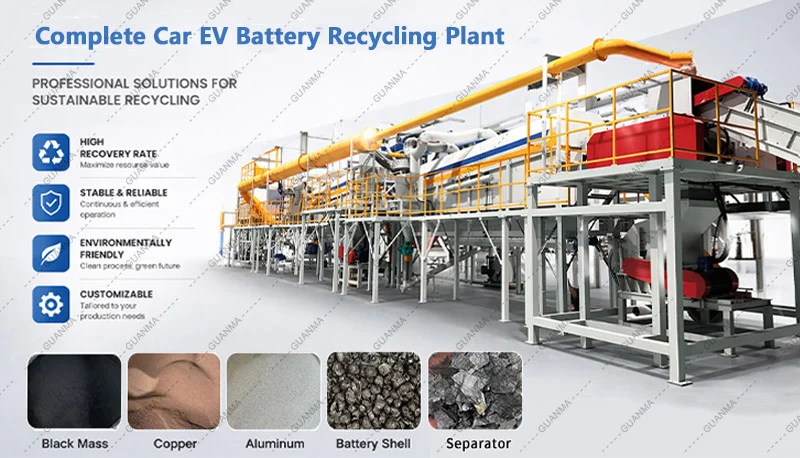
Key Equipment in a Lithium Battery Recycling Plant
A complete lithium battery recycling plant typically includes:
- Battery Discharging Machine
- Battery Dismantling Equipment
- Inert-atmosphere shredders and hammer mills
- Variable temperature control pyrolysis furnace
- Rotary Screen
- Air separators and vibrating screens
- Grinder
- Dust collection, scrubbing and gas treatment systems
- Conveying and feeding systems
- PLC control and monitoring
The right configuration depends on your input material, target output purity and local regulations. A modular design is often best because it allows you to scale as your volume grows.
How to Choose the Right Battery Recycling Solution
When evaluating a lithium-ion battery recycling process for your business, ask these questions:
- What battery types and sizes will you process?
- What output purity do your buyers require?
- What is your target throughput (kg/hour or tons/day)?
- Do you need a mobile or stationary plant?
- What safety and environmental certifications are required in your region?
- Can the system be upgraded to hydrometallurgical refining later?
Ready to Build or Improve Your Lithium Battery Recycling Line
Whether you are setting up a new lithium battery recycling plant or upgrading an existing line, the right lithium battery recycling process design makes all the difference.
Contact Guanma Machinery today to discuss your material, capacity and target output. We will help you choose the right lithium battery recycling equipment.
📩 Get Your Free Quote Today
Contact us today to discuss your project, capacity requirements, and target materials. Our team will reply within 24 hours with a customized proposal. You can also reach us directly at [email protected] — we are here to help!