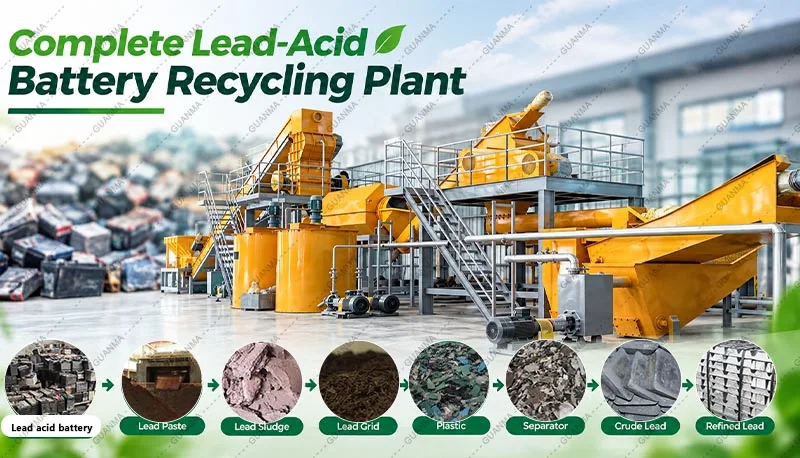
If you are evaluating lead recycling plant manufacturers for a new or upgraded facility, Guanma Machinery offers complete solutions that cover everything from used lead acid battery (ULAB) receiving to final lead ingot casting.
Complete Lead Acid Battery Recycling Plant Solutions
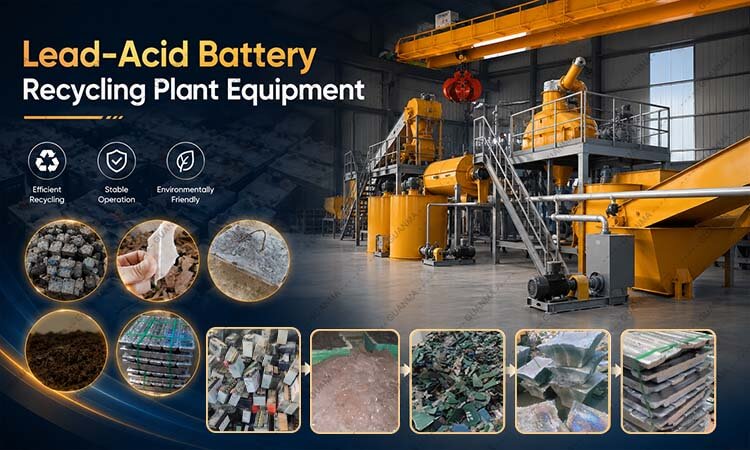
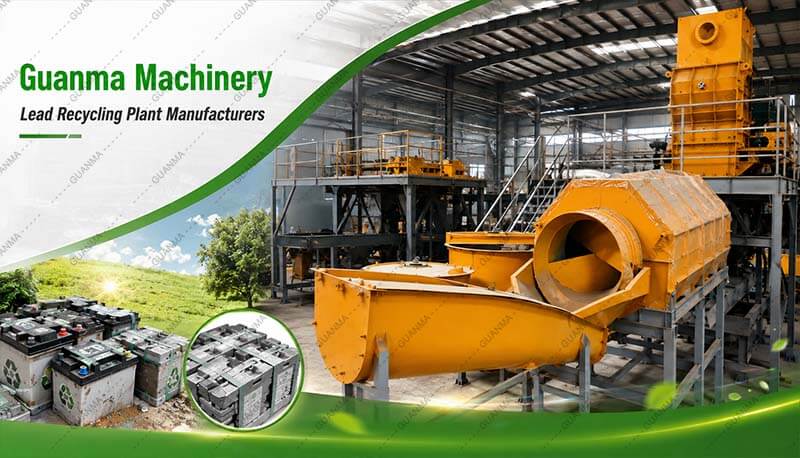
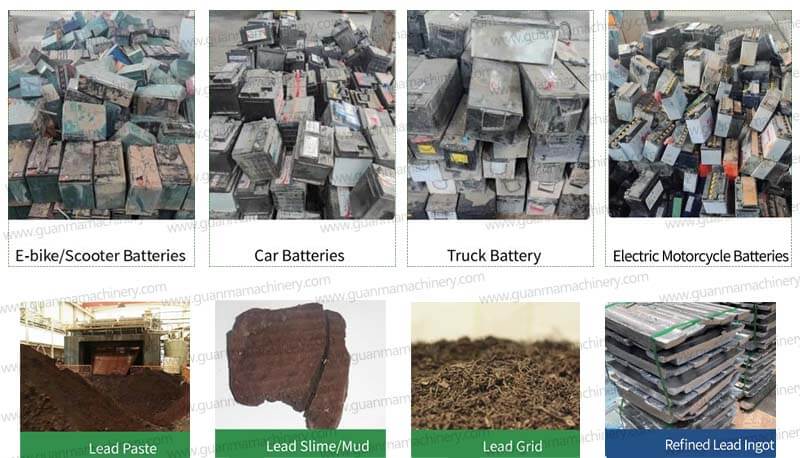
Guanma Machinery is a professional lead acid battery recycling plant manufacturer supplying full production lines for secondary lead recovery. We provide custom-designed plants for scrap lead batteries, lead paste, lead grids, and other lead-bearing wastes.
Our complete lead recycling plant scope includes:
- Battery receiving and storage systems
- Battery crushing and separation units
- Lead paste desulfurization systems
- Smelting furnaces for lead reduction
- Refining kettles and alloying equipment
- Ingot casting and stacking machines
- Baghouse dust collectors and wet scrubbers
- Wastewater treatment and acid neutralization systems
- PLC-based central control and monitoring
Because we design, manufacture, and install all core components in-house, you get a single-source supplier for the entire used lead acid battery recycling plant.
Key Equipment in a Modern Lead Recycling Plant
Below are the core units Guanma Machinery supplies as part of an integrated lead recycling plant package.
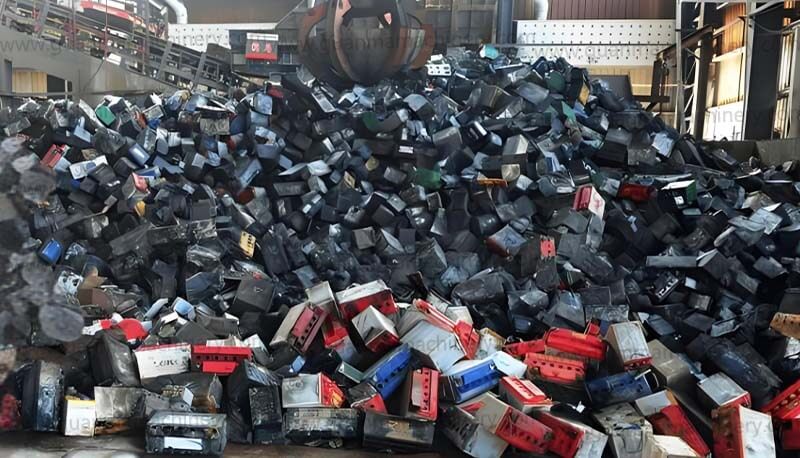
Battery Crushing and Separation System
The first stage of a modern ULAB recycling plant is automated crushing and separation. Guanma Machinery uses hammer crushers and vibrating screens to separate battery components into:
- Lead paste
- Lead grids and poles
- Polypropylene plastic
- Acid-containing wastewater
Advanced separation technology improves downstream smelting efficiency and reduces lead loss. Our systems can be designed for either manual battery cutting or fully automatic feeding, depending on your labor cost and automation requirements.

Lead Smelting Furnaces
The heart of any secondary lead recycling plant is the smelting furnace. Guanma Machinery offers several furnace options depending on the feedstock and desired output:
- Rotary furnaces for mixed battery scrap
- Blast furnaces for high-volume lead reduction
- Reverberatory furnaces for lead paste and dross
- Electric arc furnaces where electricity is more economical
Each furnace type is matched with the appropriate refractory lining, burner system, and charging equipment. We help you select the best furnace for your lead recovery from battery scrap goals, balancing capital cost, energy consumption, and metal recovery rate.

Lead Refining and Alloying Equipment
After smelting, crude lead bullion must be refined to remove impurities such as copper, tin, arsenic, and antimony. Guanma Machinery supplies complete lead smelting and refining plant equipment, including:
- Refining kettles with stirrers
- Dross removal systems
- Alloying pots for lead-antimony, lead-calcium, and other alloys
- Ingot casting machines with automatic stacking
This stage allows you to produce high-purity refined lead or custom alloys for battery manufacturing, cable sheathing, radiation shielding, and other industries.
Flue Gas Treatment and Dust Collection
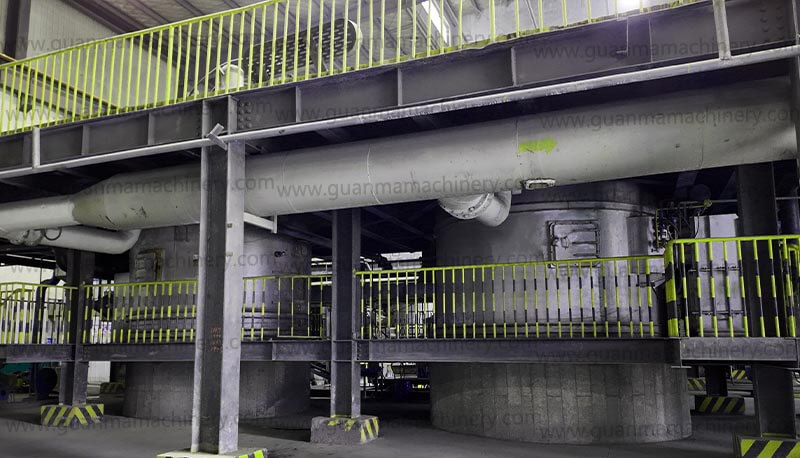
Environmental compliance is a top priority in any modern eco-friendly lead recovery plant. Guanma Machinery integrates multi-stage flue gas treatment systems to control particulate matter, sulfur dioxide, and other emissions:
- Cyclone separators for coarse dust
- Baghouse filters for fine lead dust
- Wet scrubbers for acid gas removal
- Activated carbon injection for dioxin control where required
These systems help your plant meet strict local emission limits and protect worker health.
How to Evaluate Lead Recycling Plant Manufacturers
Choosing the right partner among lead recycling plant manufacturers is critical to your project’s long-term success. Here are the most important factors to consider before signing a contract.
Technology and Automation
Ask the manufacturer about the specific technologies they use. A reliable supplier should be able to explain:
- The crushing and separation process in detail
- Furnace selection logic based on raw material composition
- Emission control methods and expected outlet concentrations
- Automation level and PLC control capabilities
Guanma Machinery provides full process flow diagrams, equipment lists, and technical proposals so you can compare options with complete transparency.
Environmental Performance
Environmental regulations are becoming stricter worldwide. Your plant must control lead dust, acid mist, wastewater, and solid waste. Guanma Machinery designs systems to meet or exceed local standards, including baghouse filtration efficiency above 99% and closed-loop water treatment where required.
Customization and Capacity
Every market has different raw material availability and product demand. The manufacturer should offer flexible capacities, typically ranging from 5 ton per hour to 60 tons per hour or more. Guanma Machinery customizes the plant layout, equipment size, and automation level according to your site conditions, budget, and production targets.
After-Sales Support and Spare Parts
Lead recycling equipment operates in demanding conditions. You need a supplier that can provide fast technical support, spare parts, and operator training. Guanma Machinery offers:
- Installation and commissioning supervision
- On-site operator training
- Remote troubleshooting
- Long-term spare parts supply
- Upgrades and capacity expansion services
Make sure your chosen battery recycling plant manufacturer has a proven service network in your region.
Step-by-Step Used Lead Acid Battery Recycling Process
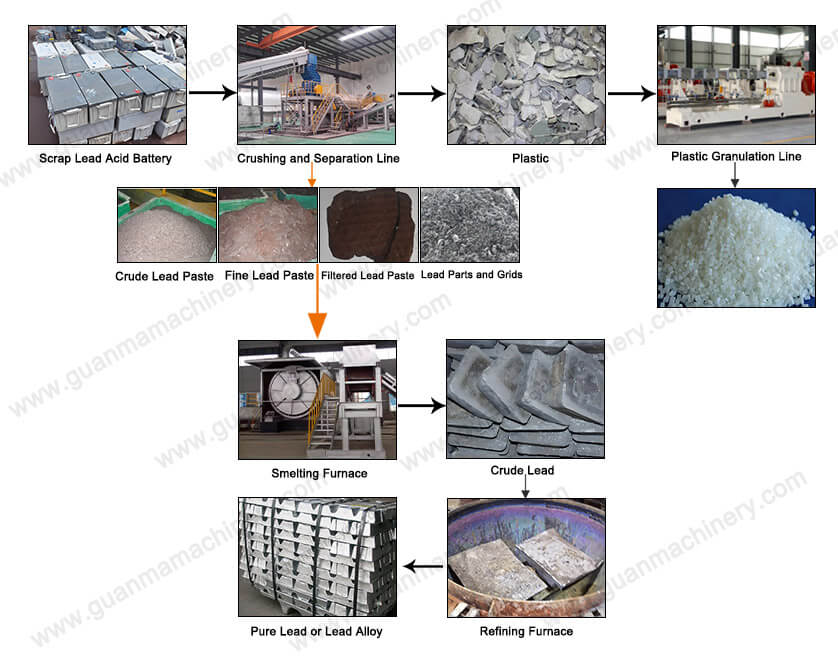
Understanding the process flow helps you communicate your requirements more clearly with potential lead recycling plant manufacturers. Below is the typical sequence for a modern used lead acid battery recycling plant.
Step 1: Battery Crushing and Separation
Whole batteries enter the crushing system, where they are broken into small pieces. The lead acid battery crushing and separation system then separates the material into lead paste, metallic lead, polypropylene, and acid.
Step 2: Lead Paste Desulfurization
Lead paste from battery plates contains sulfur in the form of lead sulfate. A lead paste desulfurization system converts lead sulfate into lead carbonate using a desulfurizing agent, reducing sulfur emissions during smelting and lowering energy consumption.
Step 3: Smelting and Reduction
Desulfurized lead paste and metallic lead fractions are fed into the rotary furnace for lead recycling or other selected furnace. At high temperatures, lead oxides are reduced to metallic lead. The molten lead is tapped and sent to refining.
Step 4: Refining and Casting
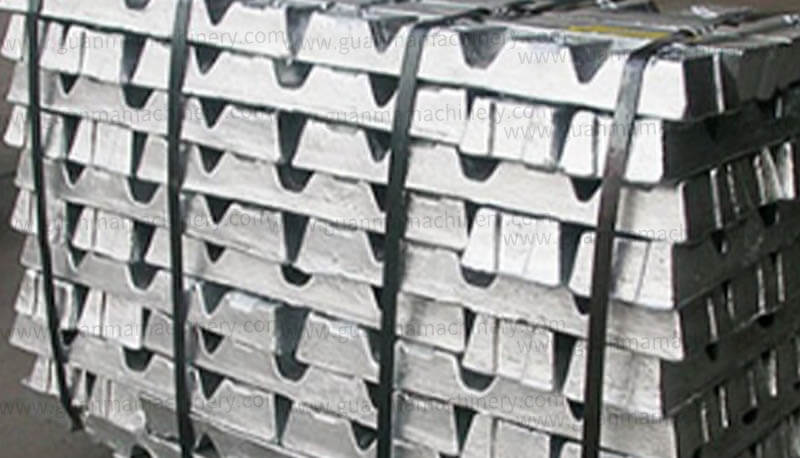
Crude lead bullion is refined in kettles to remove impurities and adjust alloy composition. The final product is cast into ingots or blocks using automatic casting machines. These ingots are then ready for sale to battery manufacturers.
Step 5: Waste Gas and Water Treatment
All flue gases pass through the lead dust collection system and wet scrubbers before being released. Wastewater from battery crushing and acid neutralization is treated and reused where possible.
Environmental Compliance and Safety in Lead Recycling Plants
For any secondary lead recycling plant, environmental compliance is not optional. Governments around the world are tightening emission limits for lead, particulate matter, and sulfur dioxide. Guanma Machinery integrates the following environmental controls into every plant:
- Fully enclosed crushing and conveying systems to prevent fugitive dust
- Negative pressure operation in key areas to contain lead dust
- High-efficiency baghouse filters for dust collection
- Wet scrubbers and desulfurization towers for flue gas treatment
- Wastewater treatment systems for acid neutralization and heavy metal removal
- Noise control and thermal insulation for operator safety
We also provide operational guidance to help your team maintain compliance and improve workplace safety. Choosing an eco-friendly lead recovery plant design not only protects the environment but also improves your reputation with regulators and customers.
Main Factors That Affect Battery Recycling Plant Cost
Plant capacity, measured in tons per hour or annual output
- Automation level, from semi-automatic to fully automatic
- Furnace type and number of furnaces
- Emission control requirements in your region
- Site preparation and civil works
- Local installation and labor costs
A small semi-automatic plant may require significantly less capital than a fully automatic high-capacity line. However, higher automation can reduce operating costs.
Partner with Guanma Machinery for Your Lead Recycling Project
Selecting the right supplier among lead recycling plant manufacturers is one of the most important decisions you will make for your recycling business.
Whether you are starting a new lead acid battery recycling plant, expanding an existing facility, or upgrading outdated equipment, our team is ready to help. Contact Guanma Machinery today to discuss your project requirements, get a detailed quotation for a high-efficiency, eco-friendly lead recycling system.
📩 Get Your Free Quote Today
Contact us today to discuss your project, capacity requirements, and target materials. Our team will reply within 24 hours with a customized proposal. You can also reach us directly at [email protected] — we are here to help!