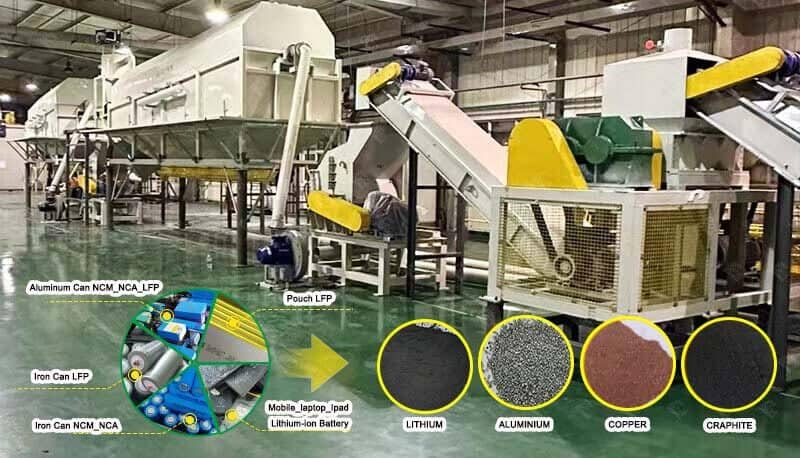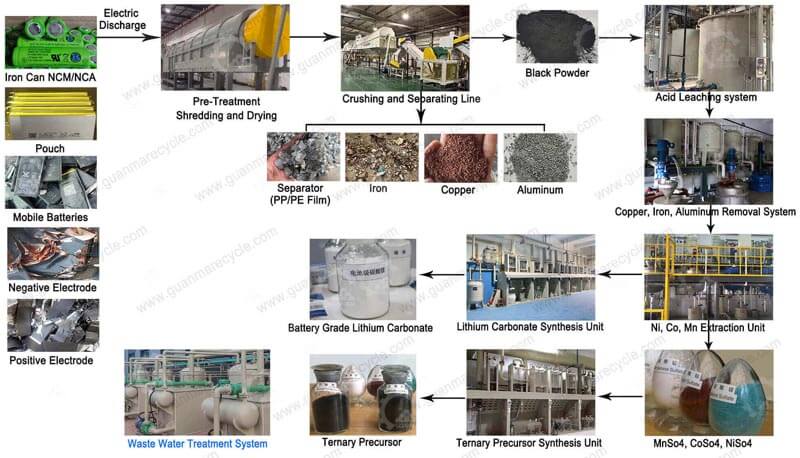
Setting up a Lithium-Ion Battery (LIB) Recycling Facility requires a complete lithium-ion battery recycling machinery line that safely converts scrap batteries into reusable materials. The core process flow includes five stages: discharging, pre-treatment/shredding, drying/pyrolysis, separation & sorting, and black mass recovery.
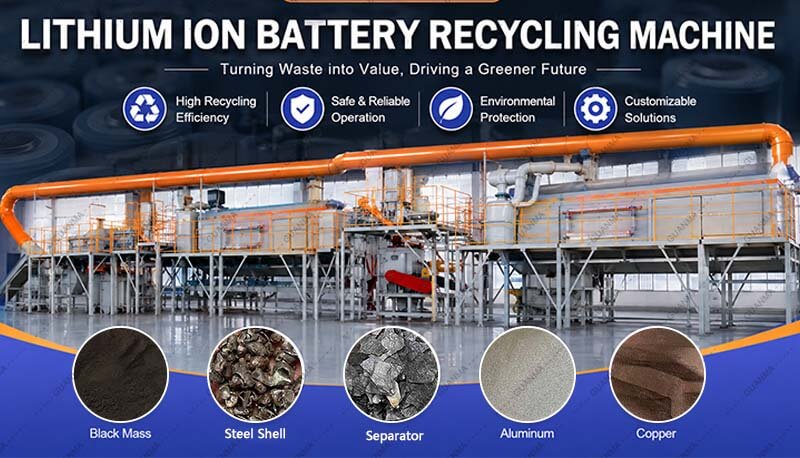
Why a Complete LIB Recycling Machinery Line Matters
A lithium-ion battery recycling facility is not a single machine. It is an integrated process line. The right battery recycling equipment maximizes metal recovery, protects workers, and produces saleable black mass with consistent quality.
Complete Lithium-Ion Battery Recycling Machinery List
1. Discharging Equipment – Safe Residual Energy Removal
Before lithium batteries can be shredded, they must be fully discharged. Residual energy can cause short circuits, thermal runaway, fire, or explosion during crushing.
Recommended equipment:
- Automatic battery discharge machine
- Resistor-based discharge unit
- Brine discharge tank / salt water bath
- Conveyor with voltage monitoring
- Exhaust hood and ventilation system
- Fire suppression nozzles
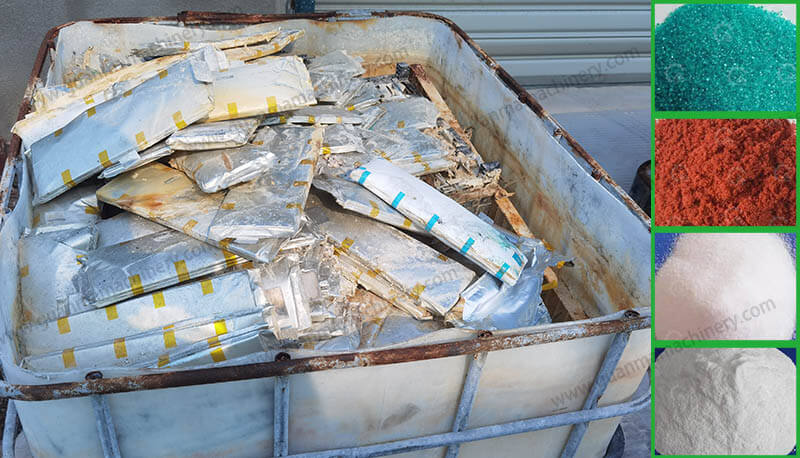
2. Pre-treatment & Shredding Machinery – From Battery Pack to Crushed Material
Pre-treatment includes dismantling battery packs into modules or cells, followed by size reduction in an inert atmosphere. The goal is to expose the internal materials for later separation.
Recommended equipment:
- Battery pack dismantling station
- Module cutting machine or band saw
- Primary twin-shaft shredder
- Secondary granulator / hammer mill
- Inert gas injection system (nitrogen or CO₂)
- Magnetic separator for ferrous metals
- Dust collection and VOC extraction system
- Temperature and oxygen monitoring sensors
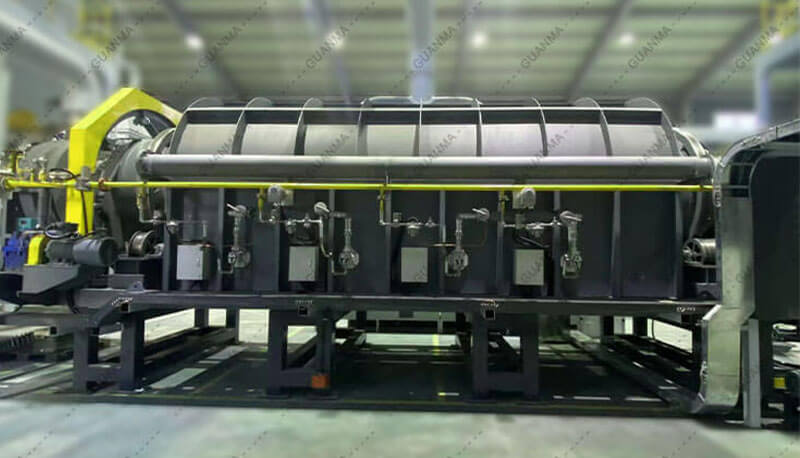
3. Drying & Pyrolysis Equipment – Remove Electrolyte and Organic Binders
After shredding, the material still contains residual electrolyte, separator plastics, and PVDF binder. Drying and pyrolysis remove these organic components and make the black mass easier to separate from copper and aluminum foils.
Recommended equipment:
- Continuous pyrolysis furnace
- Vacuum dryer
- Low-temperature drying oven
- Cooling screw conveyor
- Off-gas treatment system: thermal oxidizer, scrubber, activated carbon filter
- Nitrogen supply system
4. Separation & Sorting Machinery – Recover Copper, Aluminum, Steel, and Plastics
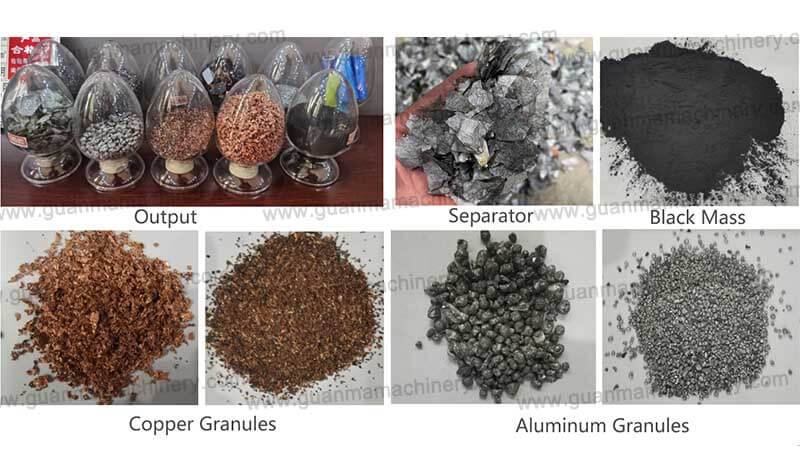
After pyrolysis and drying, the material is a mixture of copper foil, aluminum foil, steel casings, plastics, and black mass powder. The goal is to separate these fractions with high purity.
Recommended equipment:
- Gravity separator
- Drum screen
- Linear vibrating screen
- Vibrating screen
- Air separator
5. Black Mass Recovery System – Produce High-Purity Cathode and Anode Powder
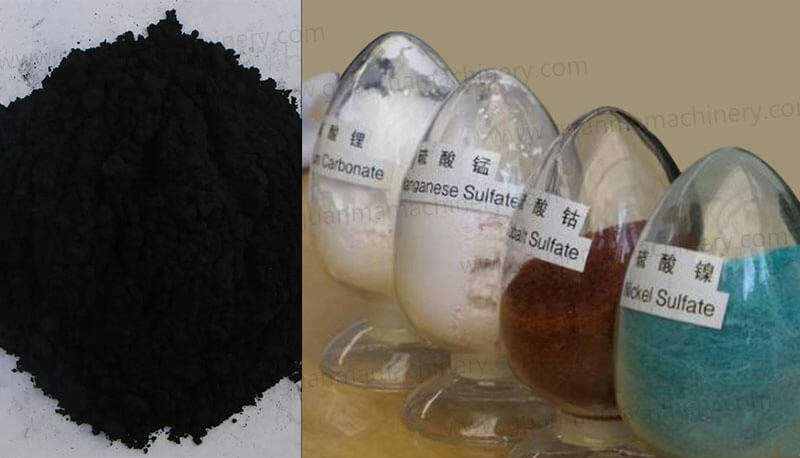
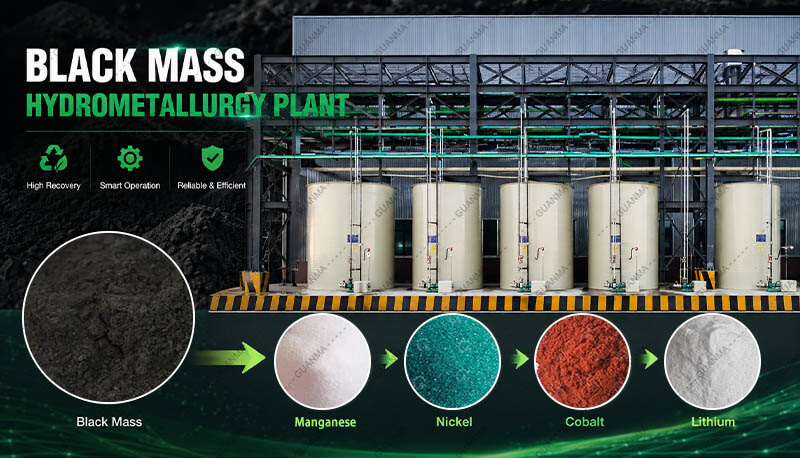
Black mass is the fine powder containing lithium, nickel, cobalt, manganese, and graphite. It is the most valuable output of a mechanical lithium-ion battery recycling plant. The goal is to recover as much black mass as possible with high purity and consistent particle size.
Recommended equipment:
- Grinding equipment
- Cyclone classifier
- Baghouse dust collector
Auxiliary Equipment and Environmental Control Systems
A complete lithium-ion battery recycling facility also requires supporting systems:
- Exhaust gas treatment system – removes VOCs, HF, and dust before emission.
- Wastewater treatment system – handles brine discharge water and cleaning water.
- Fire suppression system – automatic sprinklers, gas suppression, or foam systems for safety.
- Nitrogen generation system – supplies inert gas for shredding and pyrolysis.
- PLC control system – central monitoring and automation for the whole line.
- Dust collection system – high-efficiency cyclones and bag filters at all transfer points.
- Material handling equipment – hoppers, conveyors, storage silos, and forklifts.
How to Choose the Right Lithium-Ion Battery Recycling Machinery
When selecting equipment for your LIB recycling facility, consider these key factors:
Capacity
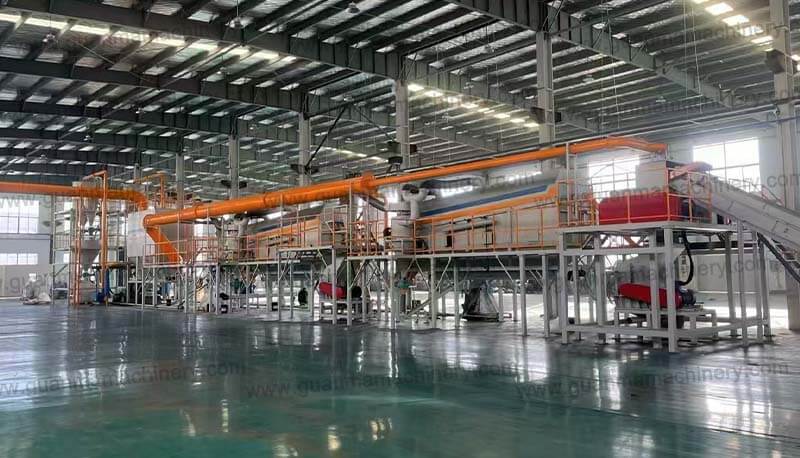
Small pilot lines may run at 500 kg/h, while full-scale plants operate at 1–5 t/h. Match equipment capacity to your expected feedstock volume.
Battery Types
Different batteries require different handling:
NMC / NCA / LCO batteries – high cobalt and nickel value, focus on black mass recovery.
LFP batteries – lower metal value but growing volume; still processed for copper, aluminum, and lithium recovery.
Cylindrical, pouch, prismatic, and EV modules – require different pre-treatment and feeding systems.
Automation Level
Manual dismantling stations are cheaper but slower. Fully automated lines with robotic dismantling, automatic feeding, and PLC control reduce labor costs and improve safety for high-volume plants.
Safety and Compliance
Look for CE, ISO certifications on critical equipment. Ensure the line includes oxygen monitoring, temperature sensors, and fire suppression. Environmental permits often require proof of VOC and dust control.
Black Mass Purity Target
If your buyers are hydrometallurgical refineries, they will require black mass with consistent chemical composition and low copper/aluminum contamination.
Start Your Lithium-Ion Battery Recycling Project Today
Setting up a lithium-ion battery recycling facility is a multi-stage project that demands the right lithium-ion battery recycling machinery for discharging, shredding, pyrolysis, separation, and black mass recovery.
If you are looking for a complete LIB recycling machinery line or need a customized layout for your lithium-ion battery recycling plant, contact guanma machinery today.
📩 Get Your Free Quote Today
Contact us today to discuss your project, capacity requirements, and target materials. Our team will reply within 24 hours with a customized proposal. You can also reach us directly at [email protected] — we are here to help!